Iran's Khamenei warns US and Israel against new attacks
Iran's supreme leader Mojtaba Khamenei on 31 October ordered commanders to prepare an immediate, geographically unrestricted response to any new US or Israeli strike, as Washington held off deciding on fresh attacks.
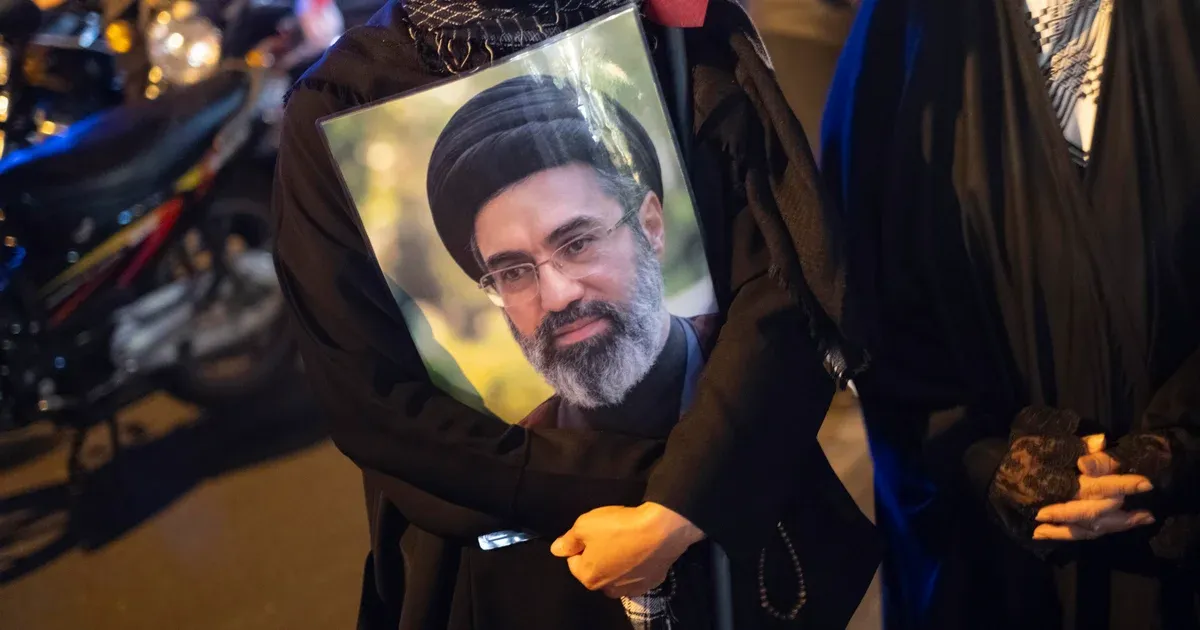 Photo: CBS News
Key points
Iran's supreme leader Mojtaba Khamenei warned the US and Israel against new attacks and ordered commanders to prepare an immediate, geographically unrestricted response, as Washington said no decision on fresh strikes had been made.
Iran's supreme leader Mojtaba Khamenei warned the United States and Israel on 31 October against launching new attacks, telling top military commanders that any threat must be met with an immediate, impactful and geographically unrestricted response. The meeting was the first reported encounter between Khamenei and Iran's military top brass since he took the helm in March. US Secretary of State Marco Rubio said the same day that President Donald Trump had not made a decision about fresh strikes.
Khamenei's warning matters because it sets Iran's terms for any resumption of fighting and widens the range of targets Iran says it would strike. He ordered commanders to update Iran's target database to include all types of tangible and intangible assets belonging to what he called the American-Zionist enemy, and to strengthen intelligence, defence capabilities and weapons production. The directives came as Trump and Israeli Prime Minister Benjamin Netanyahu have both threatened military action.
What the meeting changed
The meeting brought together Maj. Gen. Abdollahi, chief of the Joint Staff of the Armed Forces; Maj. Gen. Hatami, commander of the Iranian army; and Maj. Gen. Vahidi, commander of the Islamic Revolutionary Guard Corps. Commanders briefed Khamenei on readiness along the Persian Gulf coast, in the Strait of Hormuz, the Gulf of Oman, and the country's northwestern and southeastern borders. Khamenei said intelligent combat readiness is a fundamental prerequisite for achieving maximum deterrence.
Khamenei also instructed commanders to increase production of ammunition and weapons for reconnaissance, logistical support and combat operations, and to adapt military doctrine and tactics to emerging threats. He described public support as a central element of Iran's deterrence strategy, comparing current public gatherings to the solidarity of the 1980-1988 Iran-Iraq War, which Tehran calls the Sacred Defense. He praised the Resistance Front, referring to Iran-aligned groups across the region.
Rubio said at a Group of 20 press conference in Atlanta, Georgia, that Trump had not made a decision about new strikes on Iran. "We can achieve military objectives if we seek to. He hasn't made a decision," Rubio said, adding that the United States would prefer to act peacefully but would have the ability to act militarily if needed. He said there was no timeframe on talks between the US and Iran through mediators.
Washington holds off a decision
Trump has suggested he could launch fresh military action after the United States holds midterm elections on Tuesday, saying last weekend he was weighing whether to finish them off. In Israel, which voted on Tuesday but has yet to form a new government, Netanyahu has spoken of a historic, one-time opportunity to topple the Iranian government. Polls in both countries could shape the direction of the conflict.
Iranian Foreign Minister Abbas Araghchi said there were no plans for meetings with US officials, while calling recent US efforts toward broader dialogue a positive step. A new proposal reached with mediators would shorten the time to fully reopen the Strait of Hormuz to two days, Araghchi said, adding that Iranian diplomats were in Qatar for discussions. A decision on whether talks would be direct or indirect would come once Washington agrees to Iran's conditions.
Where the diplomacy stands
Qatari mediators landed in Tehran on Friday, and US Vice President JD Vance sent a letter to Iran's security chief Mohsen Rezaei. "I read the letter. I haven't yet responded. Their tone has completely changed," Rezaei said in a video broadcast on Iranian television, calling the change in tone a good sign. Qatar and Pakistan have been mediating, but the talks have yet to produce a lasting agreement.
The war began on 28 February with US-Israeli strikes on Iran that killed then-Supreme Leader Ayatollah Ali Khamenei and several senior military commanders. Iran retaliated with attacks on Israeli and US military assets across the Middle East. The US blockade on the Strait of Hormuz has redirected 144 vessels, according to US Central Command, up from 138 vessels two weeks earlier. The strait normally carries around one-fifth of global oil consumption.
Iran's army spokesman Brig. Gen. Mohammad Akraminia said on 31 October that any resumption of hostilities would spread the war beyond its previous boundaries. "The flames of war will undoubtedly engulf a much wider geographical area," Akraminia wrote on X, adding that the end of the conflict would not be in Trump's hands. Iran has claimed nearly 10 ships have hit mines while transiting the Strait of Hormuz.
Of the 81 attacks on ships in the Strait of Hormuz since 6 July, 59 have been on the southern route, according to the U.K. Marine Trade Operations Centre. Iran's navy said a violating oil tanker caught fire after striking sea mines in the east of the Strait of Hormuz, a claim that could not be immediately verified. Secretary Mohsen Rezaei said no new decision has been made on changing Iran's nuclear doctrine.
US midterm congressional elections take place on Tuesday, and gains for the opposition Democrats could restrict Trump's ability to enact policy. Rubio said the United States' main objective is to prevent Iran from getting a nuclear weapon, and that there is no timeframe on talks through mediators. Israeli voting left Netanyahu's camp with the most seats but short of a majority, leaving the next government's make-up unclear.
Frequently asked questions
What did Iran's supreme leader warn the US and Israel about?
Mojtaba Khamenei told top military commanders on 31 October that any level or type of threat must be met with an immediate, impactful and geographically unrestricted response, and ordered commanders to update Iran's target list to include all US and Israeli assets.
Has the US decided on new strikes against Iran?
No. Secretary of State Marco Rubio said on 31 October at a Group of 20 press conference in Atlanta that President Donald Trump had not made a decision about fresh strikes, and that there was no timeframe on talks through mediators.
When did the US-Israeli war on Iran begin?
The war began on 28 February with US-Israeli strikes on Iran that killed then-Supreme Leader Ayatollah Ali Khamenei and several senior military commanders. Iran retaliated with attacks on Israeli and US military assets across the Middle East.