Iran security chief threatens to strike US bases in Europe if used for attacks
Iranian security chief Mohsen Rezaei threatened on Wednesday to strike US bases in Europe and distant regions if used to bomb Iran, expanding the conflict's geographic scope.
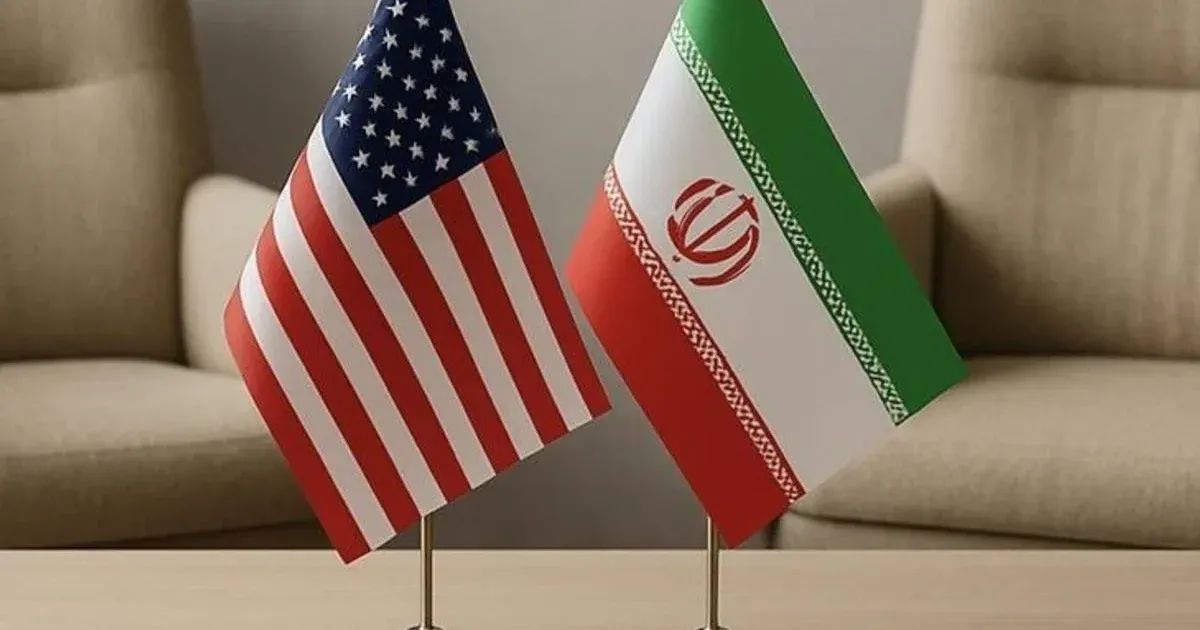 Photo: Punch
Key points
Iran's security chief threatened to strike US bases in Europe and distant regions if used for attacks against Iran.
Iranian security chief Mohsen Rezaei has threatened to strike US bases beyond the Middle East, including in Europe, if they are used for attacks against the Islamic republic. In an interview broadcast on Wednesday with Lebanon-based Al Mayadeen TV, Rezaei said: "If American aircraft take off from an American military base, even one located in a European country or some other distant region, to bomb Iran, we will strike those bases as well."
Rezaei added that Iran's response would "target America's more distant military installations", and potentially "certain islands that they assume are beyond the reach of our missiles". The threat expands the geographic scope of the conflict, which began on February 28 with US-Israeli strikes that killed Iran's supreme leader, Ayatollah Ali Khamenei. Iran responded by launching missiles and drones at countries across the region, while militant groups it backs in Lebanon, Yemen and Iraq also entered the fray.
Threat details
The warning comes as Washington has appeared to dial back threats of renewed strikes after the defeat of President Donald Trump's Republican party in recent midterm elections, in part due to the unpopularity of the war on Iran. On Tuesday, US Secretary of State Marco Rubio said there was no need to attack Iran again, citing what he described as successful efforts to undermine its economy. Tehran insists that Washington accept a raft of demands including unfreezing assets and lifting sanctions in return for reopening the Strait of Hormuz, the vital energy conduit it has blockaded since the start of the conflict.
Iranian officials have previously threatened to expand the geographic scope of the conflict should the US attack again. In late September, an adviser to Iran's new supreme leader Mojtaba Khamenei publicly mused that the war could "expand even further, reaching the Indian Ocean and perhaps beyond". The ocean is home to a strategic US-British military base at Diego Garcia, nearly 4,000 kilometres (2,500 miles) from Iran, which fired two missiles towards the installation in March. One fell short, while the other was intercepted, Britain said at the time.
Also in September, a suspected Tehran-backed plot against Britain's RAF Fairford airbase — which has been used by the US military for Iran operations — was disrupted when a local farmer reported seeing men engaged in "suspicious" activity. The US Justice Department on Tuesday announced charges against three men it described as "Iranian operatives", including one already in jail, over their roles in the affair. The charges and the new threat underscore the ongoing tensions despite the ceasefire in April 2026.
Previous warnings
Since the ceasefire, Islamic Revolutionary Guard Corps officials have boasted that Iran will unveil new weapons in future conflicts. On October 31, 2026, Supreme Leader Mojtaba Khamenei reportedly met with senior commanders of the armed forces and instructed them to strike at Europe. Khamenei told his commanders to employ "maximalist deterrence" and ordered them that they should meet any threat with "a quick response and without geographical limits". Regime media quickly adopted the talking points.
Keyhan, whose editor the supreme leader appoints, wrote that Iran's possible targets go beyond the Middle East and include "the heart of Europe", adding that Iran's missiles could reach NATO bases up 3,000 miles away. The mass-circulation Hamshahri echoed the argument and suggested that Iran's deep strikes would disrupt the US military's supply lines. Mohammad-Javad Larijani, the brother of Ali, who served as the secretary of Supreme National Security Council until a US strike killed him, and Sadeq Larijani, who chairs the Expediency Council, said: "If it happens that Iran is attacked from American bases in Germany, Albania, or England, these bases will be our legitimate targets."
Foreign Minister Abbas Araghchi said during an interview that Iran would not hesitate to attack US bases to defend itself, without specifying any region. He also mentioned that he discussed the matter with his Cypriot counterpart Constantinos Kombos, who assured him that he had told the British government not to use their base in Cyprus for attacks against Iran. Araghchi warned the United Kingdom and Bulgaria in July 2026 that they would face retaliation if the United States used their bases.
Nuclear standoff
The US and Israel have repeatedly cited Iran's nuclear programme as part of their justification for the war, but Rezaei said during Wednesday's interview that the nuclear issue was "not currently" part of the talks. Tehran, he added, had already established red lines, including that it would "not send even a tiny amount of the enriched material outside Iran". Iran's nuclear programme — and its stockpile of uranium enriched up to 60 percent, close to the 90 percent threshold needed for an atomic bomb — has been at the centre of tensions for years.
Rezaei also said Iran will not allow a "single speck" of enriched uranium to leave the country, and that Tehran needs the material to build nuclear-powered submarines. "We need the enriched material to design ships and submarines that work on nuclear energy," he said, adding that Tehran has informed Moscow that its enriched nuclear material will remain in the country and "we will use it ourselves". His remarks came a day after Rubio called Iran's terms for a political settlement "absurd" and stressed that the Trump administration believes its maritime blockade gives them the upper hand.
The threat comes as Iran appears to be working to recover from the US-Israeli attacks that began in February. Bloomberg reported on Tuesday that Iran is now capable of building about 50 ballistic missiles per month, or roughly half its prewar capacity, providing a substantial arsenal should the US and Israel resume attacking. Meanwhile, Iran unveiled on Wednesday what it characterised as a new underground "missile city", housing ballistic and cruise missiles, according to a report by Tasnim news agency.
Diplomatic efforts led by Qatar and Pakistan have been underway to negotiate an end to the war. While US President Donald Trump has said that the war was "effectively over" and that there was "momentum" to end the conflict, the two sides seem far apart on files including nuclear enrichment, sanctions relief and control over the Strait of Hormuz. On Wednesday, insurer Allianz Trade said Gulf countries face more than $200bn in damage and economic losses from the war, and the number could quadruple by 2030.
Frequently asked questions
What did Iran's security chief threaten?
Mohsen Rezaei threatened to strike US bases in Europe and other distant regions if they are used for attacks against Iran, saying Iran would target America's more distant military installations and potentially certain islands beyond missile reach.
When did the Middle East war begin?
The Middle East war broke out on February 28 with US-Israeli strikes that killed Iran's supreme leader, Ayatollah Ali Khamenei. Iran responded by launching missiles and drones at countries across the region.
What is Iran's stance on its nuclear programme?
Iran will not allow a 'single speck' of enriched uranium to leave the country, as it needs the material to build nuclear-powered submarines. The nuclear issue is 'not currently' part of the talks, according to Rezaei.