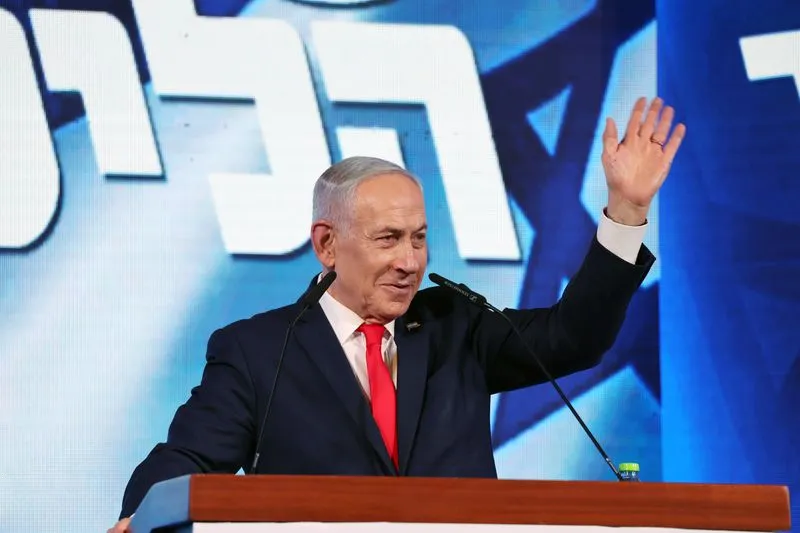
Netanyahu bloc wins 53 seats as both sides fall short in Israel vote
Benjamin Netanyahu's bloc won 53 seats and Gadi Eisenkot's opposition 48 in Israel's 28 October 2026 election, with Arab parties holding 19 and neither side reaching the 61 needed for a majority.
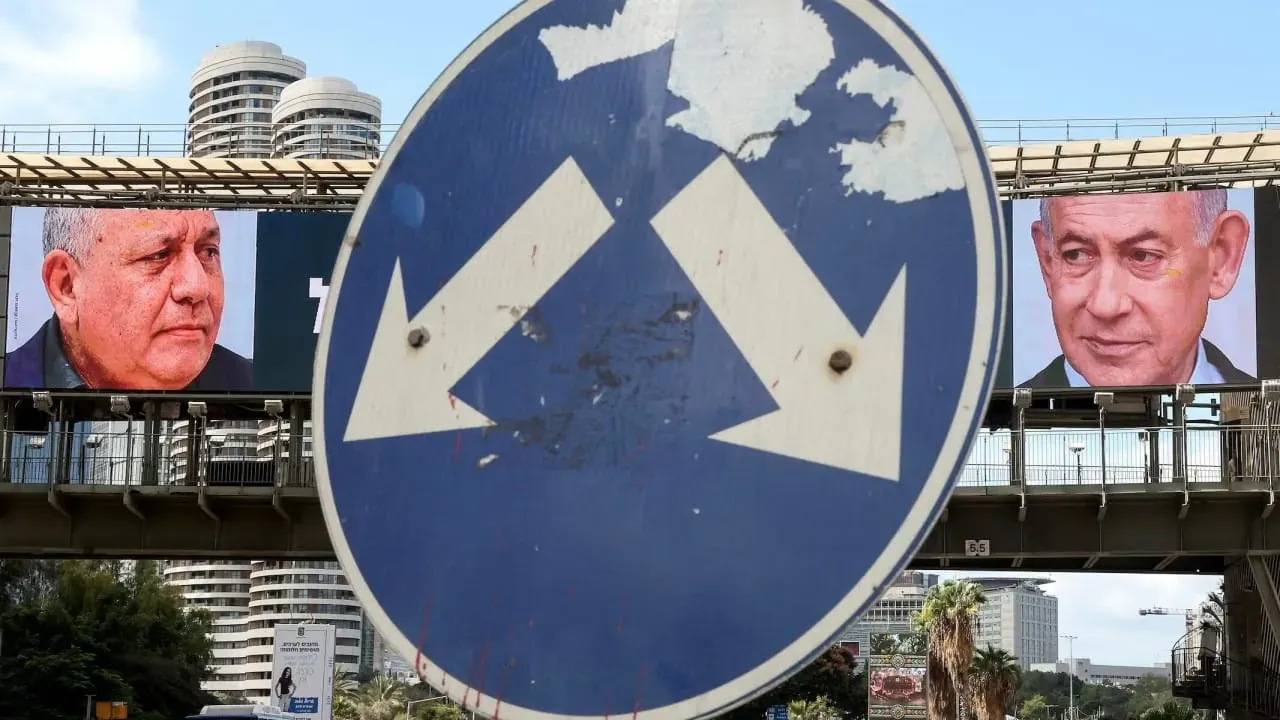 Photo: The Jerusalem Post
Key points
Neither Netanyahu's bloc (53 seats) nor Eisenkot's opposition (48 seats) reached the 61 seats needed for a Knesset majority in Israel's 28 October 2026 election.
Benjamin Netanyahu's bloc won 53 seats and Gadi Eisenkot's opposition 48 seats in Israel's election, with Arab parties holding 19 seats, according to the Central Elections Committee (CEC) after almost five million votes were counted. Neither bloc reached the 61 seats needed for a majority in the 120-seat Knesset, leaving coalition negotiations to determine who will lead the next government.
The result matters because it leaves no clear path to a government without difficult choices. Netanyahu's Likud is projected at 26 seats, while Eisenkot's Yashar is projected at 21 seats. The Arab parties' 19 seats could prove decisive, but cooperation between Jewish and Arab parties remains contested within the opposition, raising the possibility of a minority government or another election.
Neither bloc reaches 61 seats
Netanyahu's bloc comprises Likud (26 seats), United Torah Judaism, Shas and Otzma Yehudit (seven seats each), and the Religious Zionist Party (six seats). The opposition bloc includes Yashar (21 seats), B'Yachad led by Naftali Bennett and Yair Lapid (12 seats), the Democrats led by Yair Golan (eight seats), and Yisrael Beytenu led by Avigdor Liberman (seven seats).
Arab parties hold a combined 19 seats, with the Joint List at 12 seats and Ra'am at seven seats, according to the CEC. Joint List chairman Yousef Jabareen said his party was ready to pave the way for replacing Netanyahu's government, while Democrats' chairman Yair Golan argued the opposition reaches 65 seats when Arab parties are included, exceeding the 61 needed for a majority.
Yair Golan stated that Netanyahu lost, saying he knows how to count to 120 and that 65 is more than 55, calling for Arab parties to be included in government. Joint List faction chairman Ahmad Tibi told Army Radio that the opposition can form a government if it has the courage, adding that his side is extending a hand and ready to help.
Arab parties hold the balance
Turnout reached 77.7% of eligible voters, the highest level since 1999. Turnout among Palestinian citizens of Israel, who account for about one-fifth of the total population, reached about 80%, also above 1999 figures. Roi Zur, a lecturer at Essex University specialising in Israeli voting behaviour, said having two well-organised lists improved vote-collecting efficiency and ground-level mobilisation, particularly for Ra'am.
Turnout hits highest level since 1999
Eisenkot has rejected serving under Netanyahu, including in a rotation government, and other opposition leaders have ruled out joining a coalition led by the prime minister. Eisenkot has called for the leader of the largest party in the opposition bloc to become its candidate for prime minister, though no agreement has been announced within the bloc. Netanyahu said including Arab parties would be treasonous.
The CEC's count continued to shift during the day: at 84.5% of votes counted, the Netanyahu bloc stood at 54 seats and the opposition at 49, with Arab-led parties at 17 seats, according to partial results reported. The final tally of absentee votes was not expected to be confirmed until Friday, with official results formally published on 4 November 2026.
What happens next procedurally
President Isaac Herzog will consult party leaders on who they want as prime minister, then task the candidate he believes has the best chance of forming a government. That candidate has 28 days to build a coalition, with a possible 14-day extension. If they fail, the mandate can pass to another member of parliament; if that also fails, the Knesset is dissolved and Israelis return to the polls, with the current cabinet staying on as caretaker.
Frequently asked questions
Who won Israel's 2026 election?
No bloc won a majority. Benjamin Netanyahu's bloc won 53 seats and Gadi Eisenkot's opposition 48 seats, with Arab parties holding 19 seats, according to the Central Elections Committee after almost five million votes were counted. Sixty-one seats are needed for a majority in the 120-seat Knesset.
Why do Arab parties matter in forming a government?
Arab parties hold a combined 19 seats (Joint List 12, Ra'am 7), enough to push either bloc past 61 if they cooperate. Democrats' chairman Yair Golan said the opposition reaches 65 seats including Arab parties, but Eisenkot has rejected serving under Netanyahu and some opposition parties refuse to work with Arab parties.
When will Israel's final election results be confirmed?
The full tally of absentee votes was not expected to be confirmed until Friday, with official results formally published on 4 November 2026, according to Al Jazeera. President Isaac Herzog will then consult party leaders and task a candidate with forming a government, who has 28 days plus a possible 14-day extension.