King Charles to address slavery in Antigua speech on Tuesday
Buckingham Palace said King Charles III will speak with "unflinching honesty" about the transatlantic slave trade when he addresses Commonwealth leaders in Antigua on Tuesday, as Prime Minister Andy Burnham said he is open to a formal UK apology.
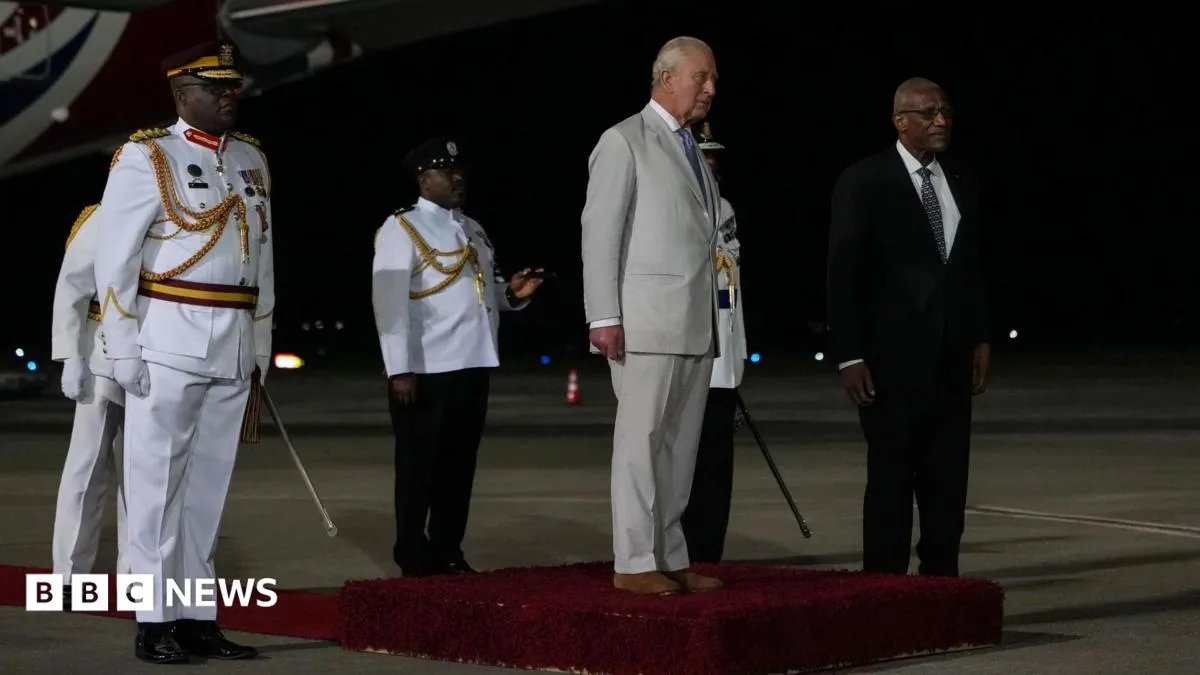 Photo: BBC News
Key points
King Charles III will address the lasting pain of the transatlantic slave trade in a speech to Commonwealth leaders in Antigua on Tuesday, Buckingham Palace said.
King Charles III will deliver a speech to the Commonwealth Heads of Government Meeting in Antigua on Tuesday, addressing the lasting pain of the transatlantic slave trade as he concludes a nine-day Caribbean tour. Buckingham Palace said the King will speak with "unflinching honesty" and "sincere sorrow" on the issue. Charles arrived in Antigua on Friday evening, the final leg of a tour covering The Bahamas, Guyana and Antigua and Barbuda.
The speech matters because it comes as the British government faces renewed pressure over its colonial legacy. Buckingham Palace said the King "will not shy away from confronting the most shameful aspects of the past during this visit". A Palace spokesperson said: "You may therefore expect him to address them in his speech with unflinching honesty, sincere sorrow, and respect for the wider discussions that will be taking place between relevant governments on this issue at CHOGM and beyond." The Commonwealth is a collection of 56 countries, most of them former British colonies.
Why the speech matters now
Prime Minister Andy Burnham said earlier he was "open" to the possibility of the UK formally apologising for its role in slavery, a change in the government's stance. The British government has never formally apologised for slavery or offered to pay reparations. It is understood the Palace was told in advance of Burnham's comments in an opinion piece published on Friday night, and the King has not made any changes to his speech in light of them.
In a piece for The Guardian, Burnham described the transatlantic slave trade as a "brutal and barbaric violation" and wrote that Britain "must face up to the past". He pledged a "structured dialogue with those affected", writing: "Listening to calls for a formal apology on behalf of the British state will form an important part of this process and I am open to them." He expressed "sorrow and regret for the pain and suffering of so many millions" but said reparations were not the right answer.
Burnham ruled out financial reparations, writing that he did "not think that British people today can be held liable for historical wrongs, however heinous, that happened in a different age under different laws and in which they played no personal part". He also announced a new debt restructuring drive for the poorest Commonwealth countries, to be led by former Labour prime minister Gordon Brown, offering to help those countries repay over a longer period and at better rates.
What Burnham said on reparations
The Palace has kept the King's role separate from government policy. A spokesperson said it would "not be appropriate" for the King to address matters of policy relating to "the UK Government's position". Royal sources stressed that decisions around an apology are a matter for government, not the Palace. A Royal aide said: "His Majesty is well practised on the diplomatic tightrope." The aide added that Charles sees it as his role to "bat for Britain", the Realms and wider Commonwealth.
The tour has already touched on slavery directly. In The Bahamas, Charles spoke of "the great suffering of the past". In Guyana, he visited Independence Park, marking the site of public executions following the 1823 Demerara Slave Rebellion, where hundreds of enslaved people were killed. Buckingham Palace said the visit was a moment for the King to learn more about the history of slavery and resistance. Guyana's President Irfaan Ali said that recognising historical wrongs was a first step, and that moving to an apology is the next step.
Opposition to a formal apology has been voiced at home. Conservative leader Kemi Badenoch said on Saturday there was "no need" for an apology and reiterated her opposition to reparations, arguing the Commonwealth should "look forward" and "not endlessly backwards". She wrote on X: "Slavery was an evil in which people from every continent and region participated." Historian Sir Anthony Seldon described the Caribbean tour as "the most perilous" of Charles's reign so far, saying the King's freedom to offer an apology is constrained because that is the Prime Minister's role.
Where the opposition stands
Reactions in the Caribbean have been divided. Barbados Prime Minister Mia Mottley, who has sought reparations, welcomed Burnham's statement, saying she would engage in good faith while still seeking reparatory justice. Denis O'Brien, founder of The Repair Campaign, called Burnham's statement disappointing and said it did not go far enough, arguing that a full and formal apology would be a significant first step towards reparatory justice. Prime Minister of The Bahamas Philip Davis said he "would be open" to losing Charles as his country's head of state.
The King continues to be treated for cancer, diagnosed in early 2024, with the Palace saying he remains on a "positive trajectory". He will soon celebrate his 78th birthday and will have carried out about 36 engagements by the end of the tour. Queen Camilla is with the King in Antigua, and they will attend a church service on Sunday morning before joining celebrations to mark Independence Day on the island.
King Charles will deliver his speech at the Commonwealth Heads of Government Meeting on Tuesday, with Prime Minister Andy Burnham also set to attend. The Palace said the King will speak in his role as head of the Commonwealth and will "primarily focus on encouraging practical solutions and united efforts". The speech is the final set piece of his nine-day tour of The Bahamas, Guyana and Antigua and Barbuda.
Frequently asked questions
What will King Charles say about slavery in Antigua?
Buckingham Palace said King Charles III will address the lasting pain of the transatlantic slave trade with "unflinching honesty" and "sincere sorrow" in a speech to Commonwealth leaders in Antigua on Tuesday.
Has the UK ever apologised for slavery?
No. The British government has never formally apologised for slavery or agreed to pay reparations. Prime Minister Andy Burnham said he is "open" to a formal apology but ruled out financial reparations.
Who else is attending the Commonwealth summit?
Prime Minister Andy Burnham is due to attend the Commonwealth Heads of Government Meeting alongside King Charles in Antigua.