Russian strikes kill one in Kyiv after Witkoff meets Putin
Russian attacks on Kyiv overnight into Thursday killed at least one person and injured 22, including four children, hours after US envoy Steve Witkoff met Vladimir Putin in St Petersburg on 21 October 2026.
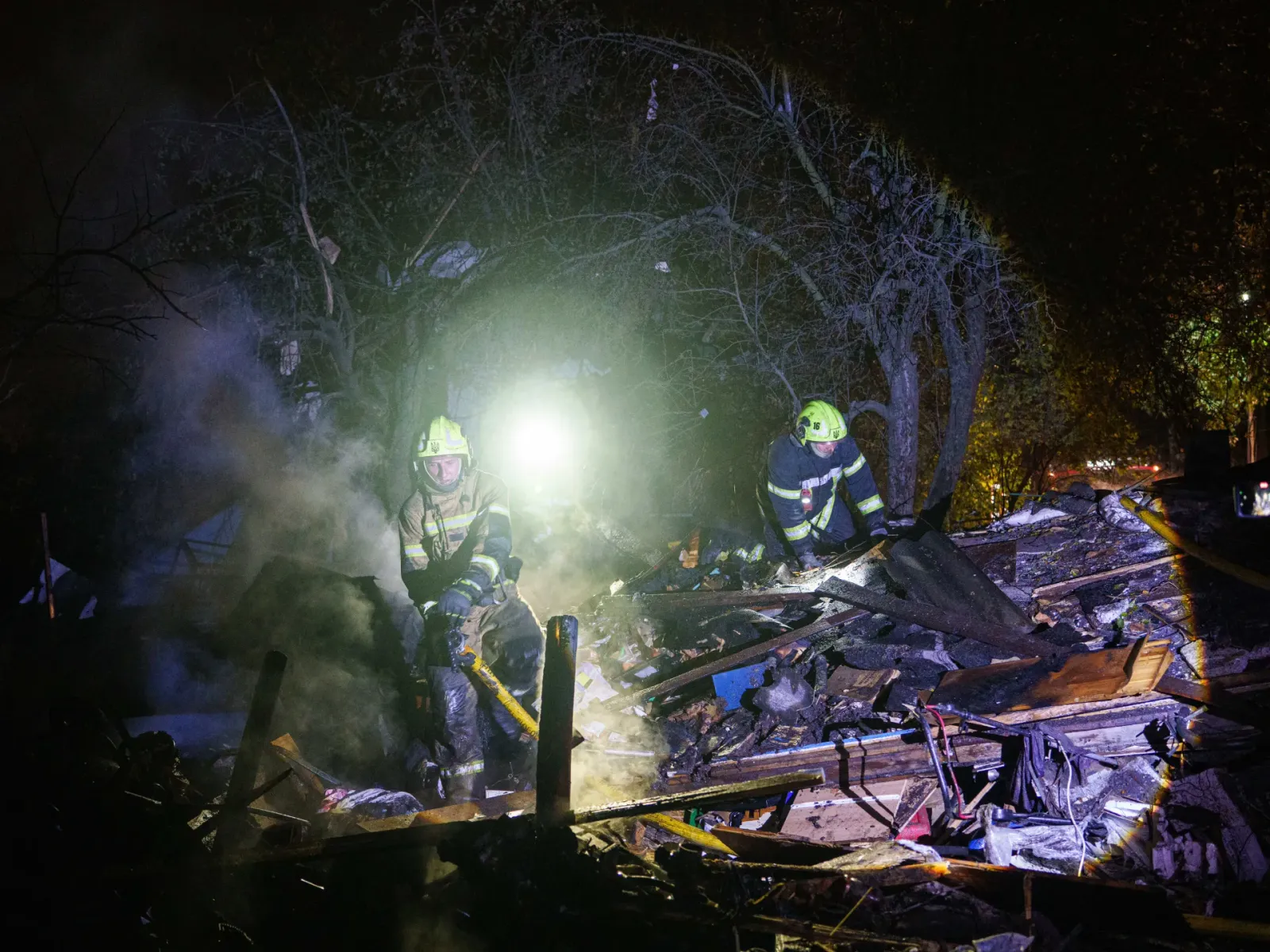 Photo: Al Jazeera
Key points
Russian attacks on Kyiv overnight into Thursday killed at least one person and injured 22, including four children, after US envoy Steve Witkoff met Vladimir Putin in St Petersburg.
Russian attacks on Kyiv overnight into Thursday killed at least one person and injured 22, including four children, Ukraine's national emergency service said. The strikes came hours after US special envoy Steve Witkoff met Russian President Vladimir Putin at Constantine Palace in St Petersburg on Wednesday to push for renewed talks on ending the war.
The toll matters because it landed within a day of the highest-level US-Russia meeting on the war in months, and because the two sides now describe the same diplomatic moment in opposite terms. President Donald Trump said the war may be as close as it's ever been to ending, while the Kremlin warned there was little substance in Ukrainian and European peace proposals.
What the strikes destroyed
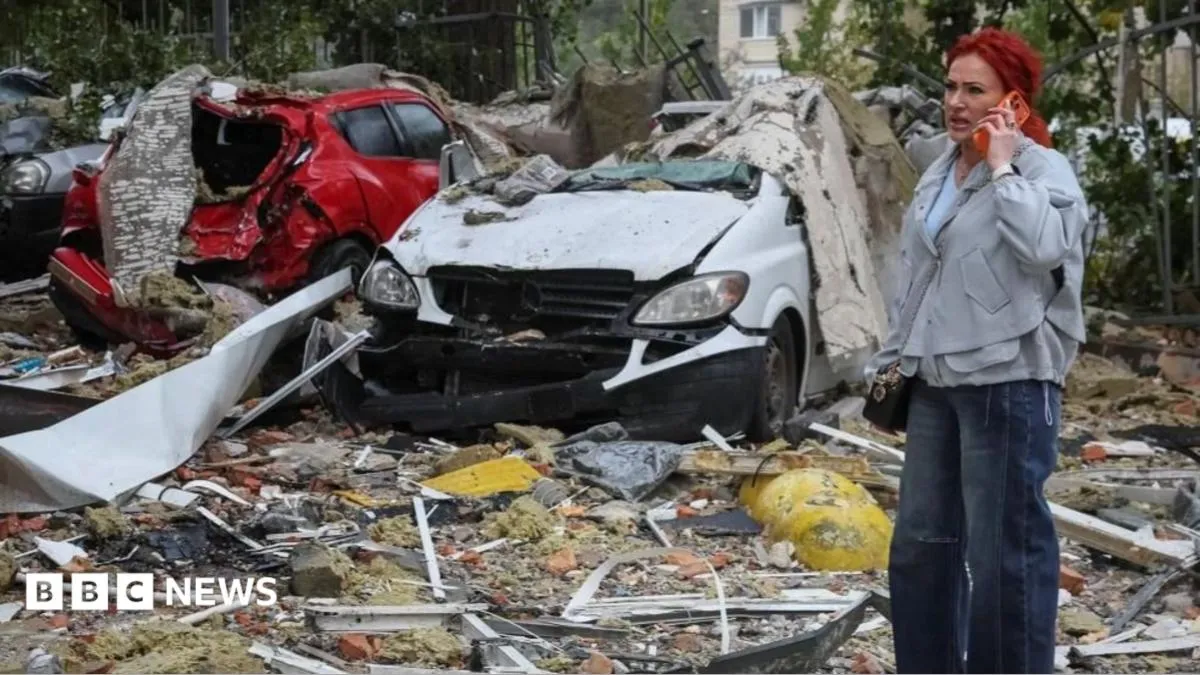
Metro infrastructure was damaged at the Pivdenny Bridge, which spans the Dnipro River, Kyiv Mayor Vitali Klitschko said. At least two people died in Russian aerial strikes on Kyiv overnight that involved at least 21 ballistic missiles, Ukrainian officials said, with three waves of strikes damaging homes, a shopping centre and a medical facility. Fires broke out and some areas experienced power and Wi-Fi outages.
The exchange ran both ways across the border. Moscow Mayor Sergei Sobyanin said Ukraine launched a barrage of 630 drones toward the Moscow region, 163 of them toward the capital, and that most were intercepted. The governor of the nearby Tula region said Russian air defences destroyed 70 drones, and another man was wounded in the Lipetsk region, its governor said.
Witkoff's visit to St Petersburg followed talks with Zelensky and European leaders in Oslo. During the meeting, Russia released jailed US teacher Stephen Hubbard as a goodwill gesture, prompting Witkoff to praise Putin as a humanitarian. Putin's spokesman, Dmitry Peskov, said Putin had freed Hubbard, 74, at Trump's request and had also taken into account the American's poor health.
What the meeting produced
Republican US Senator Thom Tillis criticised the praise directly, writing: "WTF, Steve? Look up the definition of 'humanitarian'." Vice president JD Vance defended Witkoff, saying he agreed with saying something nice to a person who had just released an American hostage. Trump declined to endorse or reject the description, saying "I wouldn't say anything one way or the other".
Ukrainian officials described the strikes as proof the meeting changed nothing on the ground. President Volodymyr Zelensky said the attack showed the meeting had made no difference, adding: "Almost immediately after another round of talks, Russia launched a pointed attack." Ukrainian Foreign Minister Andrii Sybiha wrote that "appeasement, servility, and flattery will not stop this war. Only strength will."
The Kremlin set conditions for restarting talks. Kremlin aide Yuri Ushakov said Moscow was "in principle, ready to resume" trilateral negotiations in mid-November but said "there wasn't really much substance" in the proposals. Moscow did not indicate willingness to compromise on full Russian control of the occupied Donetsk region, a halt to Ukraine's NATO membership ambitions, or a peace deal without a prior cease-fire.
Where the talks go next
Zelensky said Ukraine supports restarting three-way talks as soon as possible, preferably by early November, while Norwegian Prime Minister Jonas Gahr Stoere said the talks will likely happen in mid-November and focus on a potential post-conflict security structure. Witkoff said discussions would continue at a technical level between Washington, Kyiv and Moscow.
Alongside the diplomacy, Trump has shifted economic policy toward Moscow. He delayed a new wave of Russia-related sanctions, defending the decision on Wednesday as necessary to secure Hubbard's release, and Witkoff told Putin Washington was grateful for a diesel deal that sparked outrage in Kyiv and across Europe. The White House suspended US sanctions on Russian diesel exports last week.
Putin has consistently rejected face-to-face talks with Zelenskyy and insisted Moscow intends to seize the rest of eastern Ukraine. The war, Europe's worst since World War II, has killed tens of thousands of people since Russia's full-scale February 2022 invasion of its neighbour, and the strikes on Kyiv show the fighting continuing at full pace even as negotiators prepare the next round.
The next dated step is the trilateral negotiations the Kremlin said it was ready to resume in mid-November, with Zelensky pressing for a start as soon as possible, preferably by early November. Until those talks open, both armies are still trading barrages: ballistic missiles over Kyiv and 630 drones toward the Moscow region in a single night.
Frequently asked questions
How many people were killed and injured in the Kyiv strikes?
Russian attacks on Kyiv overnight into Thursday killed at least one person and injured 22, including four children, Ukraine's national emergency service said. Ukrainian officials separately reported at least two dead from aerial strikes involving at least 21 ballistic missiles.
When did Steve Witkoff meet Vladimir Putin?
US special envoy Steve Witkoff met Russian President Vladimir Putin at Constantine Palace in St Petersburg on Wednesday to push for renewed talks on ending the war. During the visit, Russia released jailed US teacher Stephen Hubbard as a goodwill gesture.
When could peace talks resume?
Kremlin aide Yuri Ushakov said Moscow was 'in principle, ready to resume' trilateral negotiations in mid-November. Ukrainian President Volodymyr Zelensky said Ukraine supports restarting three-way talks as soon as possible, preferably by early November.