Lula and Bolsonaro tied at 50 percent in final debate
Brazil's President Lula and senator Flavio Bolsonaro traded corruption accusations and cost-of-living attacks in their final debate on Friday, two days before the 25 October runoff, with a Datafolha poll showing them tied at 50 percent each.
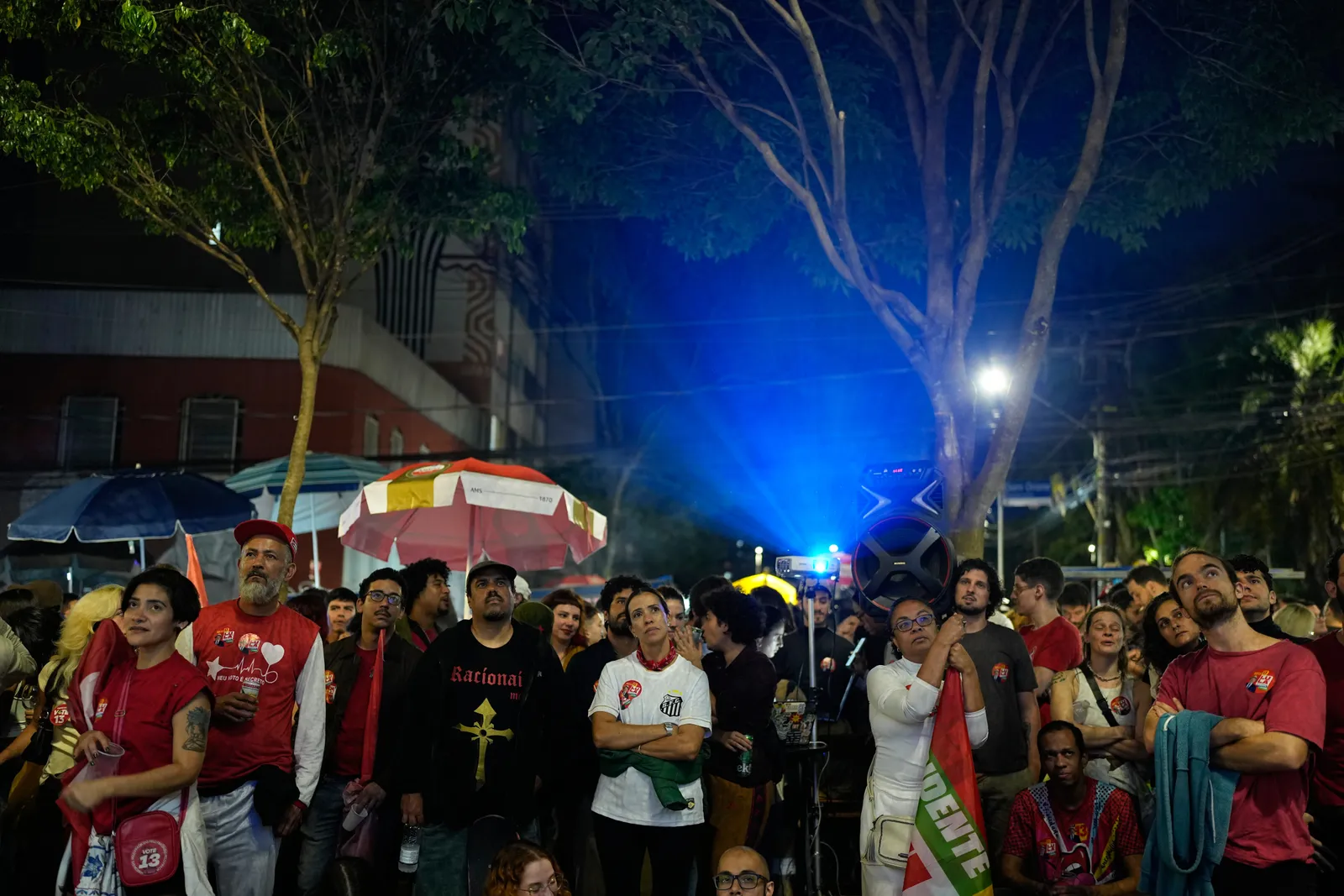 Photo: Arab News
Key points
Lula and Bolsonaro clashed on living costs and corruption in their final debate, two days before Sunday's runoff, with polls showing them tied at 50 percent each.
Brazilian President Luiz Inácio Lula da Silva and right-wing senator Flavio Bolsonaro clashed over living costs and corruption on Friday in their second and final debate, two days before Sunday's presidential runoff. A Datafolha institute survey published on Thursday showed the pair tied with 50 percent of voting intentions each. The debate was more diplomatic than their first encounter five days earlier, though neither candidate held back with cutting remarks.
The debate matters because it is the last time the two candidates will share a stage before Sunday's vote, and because polls have tightened sharply. Flavio Bolsonaro held a four-point lead in polls published two weeks ago, but the Datafolha survey published on Thursday erased that advantage. Since 1989, every first-round winner in Brazil has gone on to be elected president, and Bolsonaro took the lead in the first round this month.
What the debate changed
The candidates repeated their campaign proposals, focusing on the cost of living and security while exchanging allegations of corruption. Their first debate was loaded with insults and practically empty of concrete policy proposals, but this time they questioned each other on Brazil's economy, infrastructure and regional development. Lula attacked the 45-year-old senator's lack of experience, while Bolsonaro accused the president of leaving behind a broken country.
Lula, 80, repeatedly asked viewers to Google Bolsonaro's claims, and the senator shot back: "Who governs Brazil, you or Google?" Bolsonaro mocked Lula over the finger he lost in a metalworker accident, saying it was no use giving with one hand and taking away with nine fingers. Lula replied that he would not allow a militiaman to call him nine fingers, referring to allegations of ties to paramilitary groups in Rio de Janeiro.
Bolsonaro asked the incumbent why things are so expensive, and Lula responded that his rival does not know what hunger is. Lula challenged Bolsonaro's plan to take a chainsaw to public spending in the style of Argentina's leader Javier Milei. Bolsonaro replied that he would have the same job because Lula was leaving the country bankrupt, and asked whether he was ashamed. Bolsonaro has promised to create 500,000 more prison spots and slash government spending.
Where the polling stands
The Datafolha institute survey published on Thursday showed both candidates tied with 50 percent of voting intentions each, compared with Bolsonaro's four-point lead in polls published two weeks ago. Polls project a tie between the ideologically opposed pair in Sunday's runoff after Flavio Bolsonaro took the lead in the first-round vote. In the first round, 33 million people did not vote, the highest abstention since 1998.
Legal disputes have dominated the campaign. Both candidates went to court this week to demand their opponent be disqualified over social media abuses. Lula's campaign has accused Meta of interference in favour of Flavio Bolsonaro through alleged algorithmic manipulation. Meta denied doing anything to favour one side but acknowledged that some of Lula's campaign ads had been mistakenly deactivated due to technical errors.
The court fights over Meta
An electoral court gave Meta and X 24 hours on Thursday to explain their criteria for distributing political content and advertisements, as well as how they employ artificial intelligence. Joao Brant, Lula's campaign digital strategy advisor, said the team is concerned about what he called the obvious alignment between Meta and the US government. Bolsonaro's campaign has also accused Lula's camp of abuses.
Lula's re-election campaign has been hampered by voters turning away from him. In Osasco, a former industrial city near São Paulo that voted for Lula in 2022, voters switched to Flavio Bolsonaro in the first round this month. Gilberto Almazan, who leads a metalworkers' union there, said strong deindustrialisation changed the working class profile from industrial workers to service workers, with metal, chemical and textile factories disappearing and five malls built.
Why Osasco switched to Bolsonaro
Brazil's working class has transformed, with millions now in the gig economy. Richard Lapper, who has written biographies of both Lula and Jair Bolsonaro, argues the effects have been sharper in Brazil because it industrialised late and deindustrialised early, calling Lula a victim of his own success. Unemployment fell to a record low and Brazil left the United Nations Hunger Map under Lula, but Lapper describes a crisis of expectations.
Lula's campaign has focused on mobilising hundreds of thousands of people, particularly students, to get the vote out for round two, and claims one rally in São Paulo attracted about a million people. Flavio Bolsonaro has proposed cutting government spending, ministries and some taxes, though he has said he would maintain some of Lula's flagship welfare programmes. Jair Bolsonaro is serving a 27-year sentence for attempting a coup.
A dentist and Bolsonaro voter, Lizie Moreira, 60, said that the debates have descended to a fifth-grade level, which she called absurd. Social Communications Minister Sidonio Palmeira said before Friday's program that Lula wants to talk about proposals, unlike Bolsonaro, who prefers attacks and provocations. The runoff vote takes place on Sunday, 25 October, with polls showing the race tied.
Frequently asked questions
When is Brazil's presidential runoff and who is running?
The runoff is on Sunday, 25 October, between President Luiz Inácio Lula da Silva and senator Flavio Bolsonaro, who took the lead in the first-round vote. Since 1989, every first-round winner has gone on to be elected president.
What did the final debate between Lula and Bolsonaro focus on?
The candidates focused on the cost of living and security while exchanging allegations of corruption. Lula attacked Bolsonaro's lack of experience, and Bolsonaro accused the president of leaving behind a broken country and asked why things are so expensive.
What do polls show ahead of the runoff?
A Datafolha institute survey published on Thursday showed the pair tied with 50 percent of voting intentions each, compared with Bolsonaro's four-point lead in polls published two weeks ago.