Netanyahu's Likud claims Israeli election stolen after losing majority
Benjamin Netanyahu's Likud party claimed Arab-led parties stole Israel's election on Tuesday, as final results showed his bloc winning 53 of 120 Knesset seats, short of a 61-seat majority.
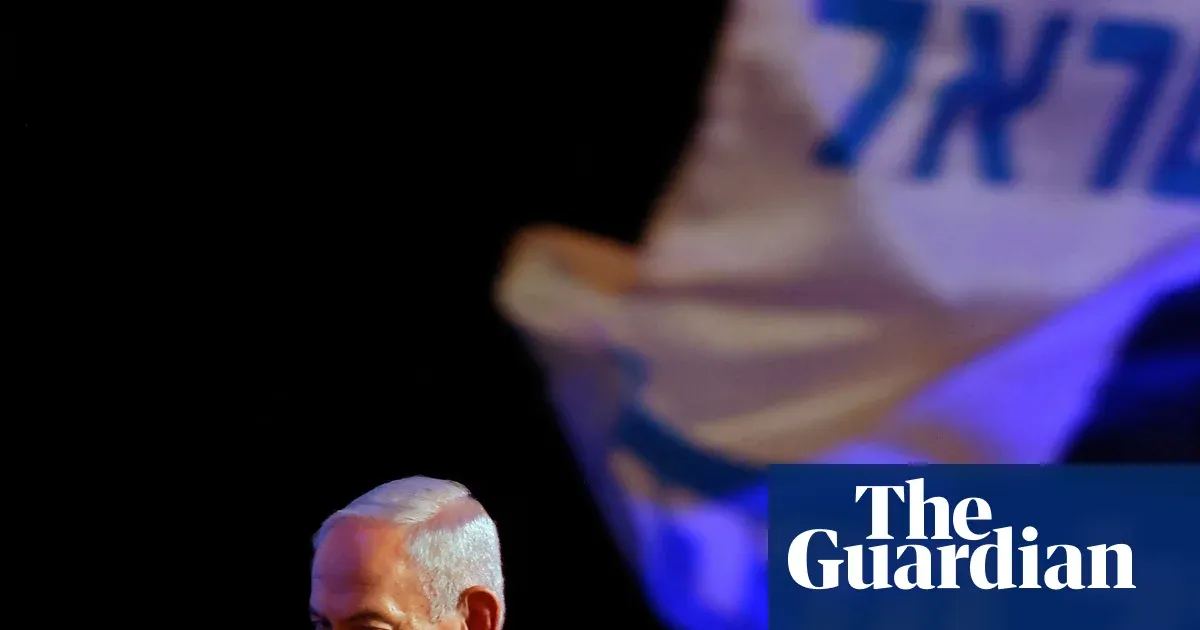 Photo: The Guardian
Key points
Netanyahu's Likud party claimed Arab-led parties stole Israel's election after final results showed his bloc won 53 of 120 Knesset seats, losing its majority.
Benjamin Netanyahu's Likud party claimed Arab-led parties stole Israel's election on Tuesday, amplifying unsubstantiated allegations after final results showed his bloc lost its parliamentary majority. The pro-Netanyahu bloc won 53 seats in the 120-member Knesset, while opposition leader Gadi Eisenkot's bloc took 48 seats and the Arab-led Joint List and Ra'am parties secured the remaining 19 seats, a historic high for the Arab Israeli community.
The allegations matter because they target the balance of power in a deadlocked parliament. With no bloc reaching the 61 seats needed for a majority, the two Arab-led parties hold the balance of power in the 120-seat Knesset. Netanyahu's claims of stolen votes come as opposition parties weigh whether to vote together in the new Knesset.
Why the allegations matter
Likud's statement, posted by Netanyahu on X, claimed the election was stolen "through serious criminal offences of bribery, threats, violence, forgeries and the use of prohibited software to mobilise voters." Netanyahu and his allies called on the internal security service, Shin Bet, to investigate alleged vote buying in Palestinian communities in Israel, supposedly funded by foreign money. Likud said it was sending hundreds of testimonies and pieces of evidence to police, the Central Elections Committee and Shin Bet.
Election officials and police disputed the claims. Dean Livneh, acting director general of the central elections committee, said there appeared to be no basis for the claims. Police officials quoted across the Israeli press called the allegations groundless, saying voting had been relatively trouble-free. The election committee's letter to a member of parliament stated that "allegations of systematic violations of electoral integrity are baseless," even as an investigation proceeded.
Supreme Court Justice Noam Sohlberg, head of Israel's election committee, said "serious suspicions" of foreign interference had been brought before him. In a letter to Shin Bet, Sohlberg said he could not verify the claims but asked the agency to investigate given their serious nature. The committee said the investigation was based on classified intelligence and wanted findings from Shin Bet within a week. Livneh warned that reports about the probe had been "entirely unfounded."
Final results confirmed
Final results released early on Friday local time confirmed the seat counts: 53 for the pro-Netanyahu bloc, 48 for Eisenkot's bloc, and 19 for Joint List and Ra'am. The bloc figures compare with 68 seats Netanyahu's coalition controlled at its peak in the previous parliament, leaving his camp short of the 61 seats needed to govern alone.
Israeli media reported that members of Netanyahu's party accused Qatar of funding vote-buying and voter mobilisation. Qatar's government categorically denied any involvement, calling the allegations ridiculous and dangerous. The Shin Bet said its investigation was not meant to "cast aspersions" on an entire section of the population that "exercised its right to vote in a democratic and lawful manner."
Opposition leaders accused Netanyahu of trying to delegitimize the results. Eisenkot said Likud was doing this "because they lost" and had embarked on a coordinated campaign to delegitimize the election. Yair Golan, head of the Democrats party, accused Netanyahu of an ugly delegitimization campaign directed against the Arab public. Yousef Jabareen, the Joint List leader, said Netanyahu was defeated at the ballot box and refused to come to terms with the Arab public's vote. President Isaac Herzog called on leaders to avoid tarnishing an entire community.
What happens next
The record turnout among Arab Israelis appeared driven by outrage at routine discrimination and fear that conditions could worsen if national security minister Itamar Ben-Gvir and finance minister Bezalel Smotrich secured another term. On Thursday, Ben-Gvir called for the arrest of Arab party leaders, and Smotrich demanded they be subjected to Shin Bet interrogation. Some ballot packets sent to Nazareth polling stations were in Hebrew alone rather than in Hebrew and Arabic, and monitors sent by far-right parties attempted procedural ploys to slow voting.
The count is complete, but results still need to be certified and submitted to the country's president next Wednesday. The newly elected Knesset is due to be sworn in within 14 days of the election. Eisenkot said any investigation should be conducted without fear or favour but could not be used to delay the Knesset's convening. Combined with Eisenkot's bloc, the Arab-led parties would hold an ad hoc 67-seat majority during the interregnum, which could last from a couple of weeks to several months.
Frequently asked questions
What did Netanyahu's party claim about the Israeli election?
Likud claimed Arab-led parties stole the election through bribery, threats, violence, forgery and prohibited software, potentially with foreign backing. The allegations were called unsubstantiated by election officials and police, and Qatar denied involvement.
What were the final results of Israel's election?
Netanyahu's bloc won 53 seats in the 120-member Knesset, Eisenkot's opposition bloc won 48, and the Arab-led Joint List and Ra'am won 19 combined. No bloc reached the 61 seats needed for a majority.
When will Israel's election results be certified?
The count is complete, but results must be certified and submitted to the president next Wednesday. The new Knesset is due to be sworn in within 14 days of the election.