Evacuees from Russian-held Oleshky cross into Ukraine during six-day ceasefire
Starved residents of Russian-occupied Oleshky crossed into Ukraine's Chernihiv region on 31 October under a six-day local ceasefire brokered by US first lady Melania Trump, the first truce of its kind in more than four years of war.
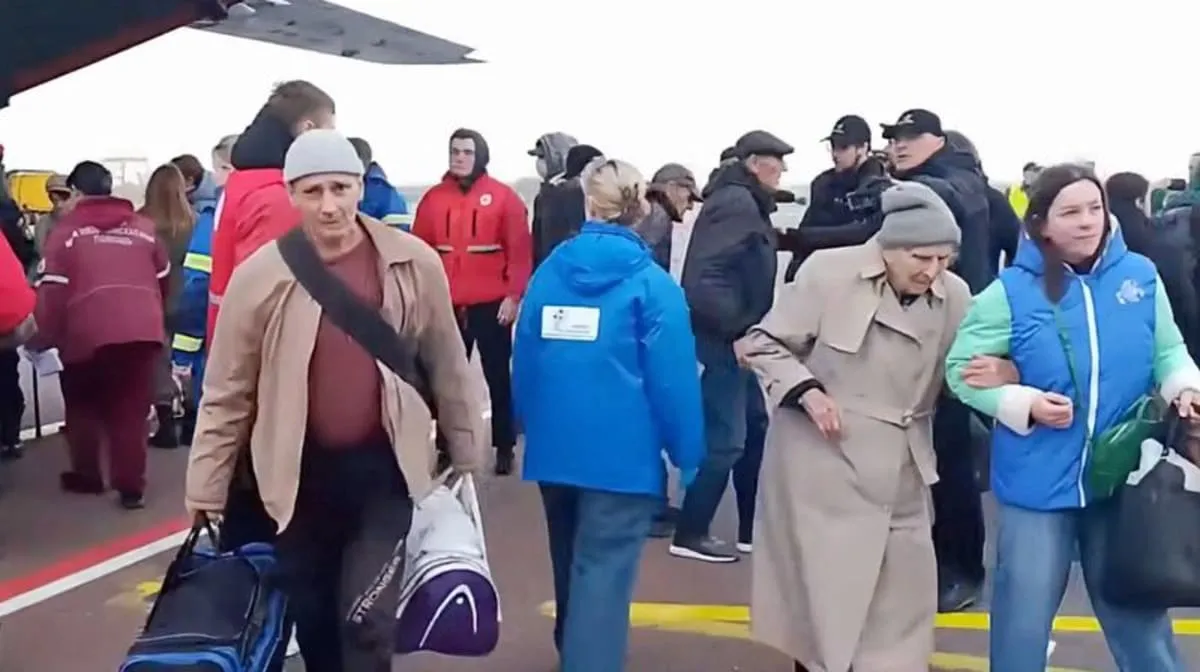 Photo: AOL (Reuters)
Key points
Starved residents of Russian-occupied Oleshky crossed into Ukraine on 31 October under a six-day local ceasefire brokered by US first lady Melania Trump.
Starved and exhausted residents of the Russian-controlled town of Oleshky crossed into Ukraine on 31 October, in the first civilian return under a humanitarian truce of its kind in more than four years of war. Ukrainian President Volodymyr Zelenskiy confirmed the arrivals at the border in the Chernihiv region, saying all returnees would receive the assistance they need.
The six-day local ceasefire in Oleshky was reached after mediation by US first lady Melania Trump, with the involvement of the pope, and is the longest local pause in fighting since Russia's full-scale invasion in 2022. The truce allowed both sides to de-mine roads and deliver food, medicines and other supplies into the town, which sits just a few kilometres from the front line in the southern Kherson region.
Why the truce mattered
Zelenskiy thanked the United States and Melania Trump for the mediation, and Ukrainian officials greeted the evacuees with posters reading "You're not alone" and "We embrace with our hearts." The ceasefire began at 3 a.m. On a Tuesday and was expected to continue through Sunday evening, and had held without violations according to both Ukrainian and Russian officials.
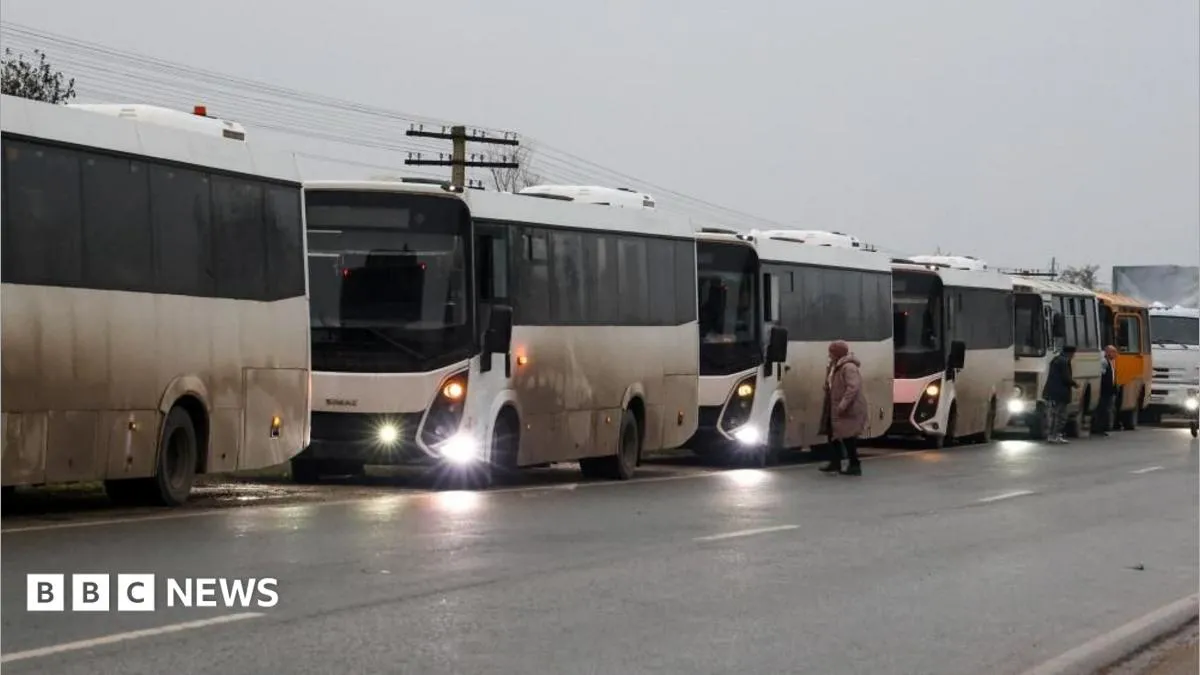
The route out of the devastated town was long and indirect. Residents first travelled by bus via Crimea to the Russian town of Anapa, then flew to Belarus — to Homel — before continuing to Ukraine. A video shared by Ukraine's ombudsman showed dozens of residents, many of them elderly, slowly disembarking from a plane at a Belarusian airfield.
Some evacuees needed help to walk, a few were carried on stretchers or in wheelchairs, and they brought only a bag or two of luggage. Dogs were unloaded from the plane in cages. Several large buses then crossed into Ukraine's northern Chernihiv region from Belarus, where relatives waited, ambulances lined the street, and military tents offered hot meals, tea and medical aid.
The route out of Oleshky
Before the evacuation, an estimated 1,700 people remained in Oleshky, a town with a pre-war population of about 24,000 that has been under Russian occupation since the first days of the invasion. Supply routes were disrupted by fighting and drones, and according to some residents food deliveries were stopped in May, pushing hundreds of people into starvation.
One elderly evacuee in a wheelchair said he had lost 20 kilograms over the past year and become so weak he needed hospital treatment. Resident Svitlana Yermakova said people ate grass to survive, telling reporters: "We chopped grass and squash ... just to hold on." She said she rode a bicycle through minefields to a nearby village to find food for herself and her dog, Manila.
Hunger before the ceasefire
Dmytro Lubinets, Ukraine's human rights ombudsman, said the oldest returning resident was 94 and the youngest a baby just over one, but gave no exact figure for how many people returned. Ukrainian authorities also restricted disclosure of the number of evacuees and the border crossing location, to safeguard those who stayed and to protect future humanitarian missions.
US first lady Melania Trump posted on social media on Friday that the humanitarian convoy could safely evacuate more than 750 people, and Pope Leo XIV pressed Russian and Ukrainian leaders to allow aid deliveries and civilian evacuations. Some residents chose to go to Russia, while others stayed in Oleshky despite the lack of gas, electricity and running water.
Russian Human Rights Commissioner Yana Lantratova said living conditions in the town remained difficult and that she would keep working with Lubinets to help those who stayed, saying on Telegram: "The mission has come to an end." Kremlin spokesman Dmitry Peskov said the two ombudsmen had built trust during the ceasefire, but the Kremlin called it an isolated situation hard to extend to the broader peace process.
Fighting continued elsewhere
Fighting continued elsewhere during the truce. Zelenskiy said Russia attacked Ukrainian energy infrastructure, and Ukraine's military said it hit a major Russian producer of missile fuel in the Rostov region. A Ukrainian drone attack killed two people in Russia's Bryansk region, according to regional Governor Yegor Kovalchuk, and Russia's Ministry of Defense said its forces shot down 433 Ukrainian drones overnight.
Negotiators from Ukraine, Russia and the United States are due to resume talks in Abu Dhabi in early November, after discussions were suspended in February following the outbreak of the war in Iran. The Oleshky ceasefire was set to end on Sunday, and the Kremlin said the arrangement was difficult to extrapolate to the wider peace process.
Frequently asked questions
How did residents leave Russian-occupied Oleshky?
Residents travelled by bus via Crimea to the Russian town of Anapa, then flew to Belarus — to Homel, according to CBS News — before crossing into Ukraine's Chernihiv region, where relatives, ambulances and aid tents waited on 31 October.
Why was a ceasefire needed for the evacuation?
Supply routes to Oleshky were disrupted by fighting and drones, and some residents said food deliveries stopped in May, pushing hundreds into starvation. The six-day local ceasefire allowed de-mining of roads and delivery of food, medicines and other supplies.
How many people were evacuated from Oleshky?
No exact figure was given. Ukraine's ombudsman Dmytro Lubinets gave no number, and Ukrainian authorities restricted disclosure of evacuee numbers. US first lady Melania Trump posted that the convoy could safely evacuate more than 750 people, and an estimated 1,700 residents remained before the evacuation.