Two mathematicians claim Riemann hypothesis proofs within hours
Levent Alpoge released a Claude-assisted Lean proof on 20 November, hours before Stanford postdoc Alessandro Masullo published a 940-page human draft of the same result.
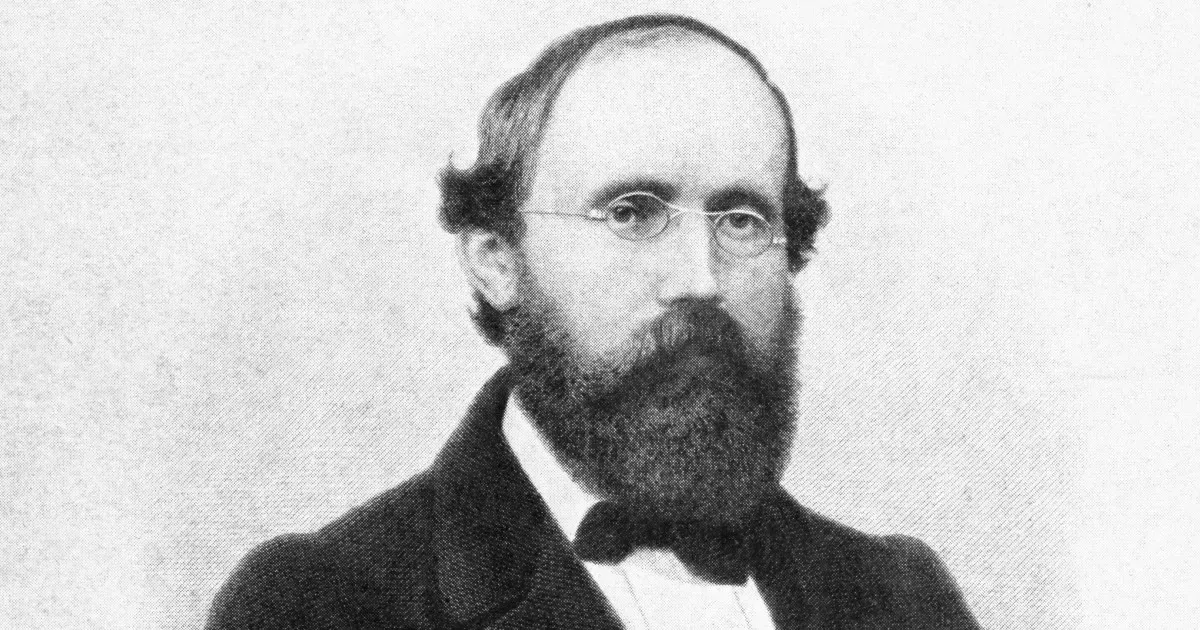 Photo: Al Jazeera
Key points
Two mathematicians claimed independent proofs of the 167-year-old Riemann hypothesis within hours, one built with Claude in Lean code and one written entirely by a human.
Levent Alpoge, a member of Anthropic's technical staff, wrote on his website on Friday that he believes he has discovered a proof of the Riemann hypothesis working with Claude. He said the proof covers the generalised Riemann hypothesis, which extends the original conjecture to a broader family of mathematical functions. The claim, if it holds, would settle a question first posed by Bernhard Riemann in 1859.
Alpoge did not publish a conventional paper. He released the argument in Lean, a programming language and proof assistant that checks reasoning step by step. He was open about how much of the work was Claude's, writing that “Claude far outpaced me near the finish line”. The hypothesis is among the Clay Mathematics Institute Millennium Prize Problems, each carrying a $1m award.
What Alpoge released
Kevin Buzzard, professor of pure mathematics at Imperial College London, said nobody yet understands what the proof actually shows. “At the minute, we don't even know why the theorem is true,” he said. He described the artifact as 17 million lines of Lean code that might correspond to tens of thousands of pages of mathematics, and said it is not yet known how much of it is new ideas.
Buzzard said people around the world are translating parts of the programming language back into English, and he expects answers fairly soon. “Experience shows you that you give the humans the Lean code, and within a week or two, they have a much better understanding of what's actually going on in this code,” he said. Several participants in a Zulip chat, including MIT mathematician Andrew Sutherland, said they had confirmed that Alpoge's solution compiles successfully.
Within hours, a second claim arrived. Ravi Vakil, a Stanford professor and president of the American Mathematics Association, posted a proof of the general Riemann hypothesis written by Stanford postdoc Alessandro Masullo, noting that “it is all human, with no AI”. Vakil said the hope had been to bring Masullo to Stanford for a year to polish the writing and run it past enough people before announcing it.
A human draft appears
Masullo said the draft is the result of 12 years of work. In a brief introduction, he wrote that “if any message at all this work is meant to send to the mathematician who feels discouraged by the pace and tone of the current climate, it is this: we are still here. We are very much alive. We are not going anywhere.” The draft runs to roughly 940 pages, according to a newsletter account of the release.
Without being expressed in Lean, it is too early to say whether Masullo's proof checks out, much less whether anyone understands it. The contrast between the two releases is sharp: the AI-assisted solution is probably correct if it compiles with no extra axioms, while the human draft is understandable but has not been machine-checked. Neither has been fully read through by the mathematics community.
The hypothesis concerns the distribution of prime numbers, the whole numbers divisible only by one and themselves, such as 2, 3, 5 and 7. Abhishek Saha, professor of mathematics at Queen Mary University of London, said the patterns of the primes are encoded in a mathematical object called the Riemann zeta function, introduced by Bernhard Riemann in 1859. He called it “the most famous and important unsolved problem in mathematics”.
Why the result matters
Saha said the implications extend across large parts of mathematics, and that hundreds of other mathematical results have been proved assuming the hypothesis is true. Buzzard said the result also matters beyond pure mathematics, including for internet security. He said some algorithms run very quickly but are not known for certain to work, and that if the generalised Riemann hypothesis is true, then they do work.
Buzzard compared the result with the Navier-Stokes problem, another Millennium Prize problem, which OpenAI said an unreleased AI model had solved in September. He said that one has no applications at all and is “just of theoretical interest”, whereas the Riemann hypothesis has applications to neighbouring fields. He also called the Riemann hypothesis “just, in some sense, at the foot of a mountain”, pointing to stronger versions such as the extended and grand Riemann hypotheses.
Alpoge described the precise timing as horrible. In an essay announcing his findings, he wrote that he messaged Anthropic chief executive Dario Amodei the previous Sunday night to ask how to announce that he had found a Lean-compilable solution. He also described a “stream-of-consciousness jaunt through the experience of finding all the pieces of the argument through incredible confusion with Claude”. Both AI-claimed Millennium Prize results will take years to verify.
Alpoge and a collaborator, NYU mathematician Tristan Buckmaster, also released another important proof related to the Navier-Stokes equations. Both AI-claimed Millennium Prize results will take years to verify, according to the newsletter's tally. For now, the mathematics community is working through the Lean code, with Buzzard expecting a much better understanding within a week or two of the release.
Frequently asked questions
What is the Riemann hypothesis?
First proposed by Bernhard Riemann in 1859, it concerns the distribution of prime numbers and is widely regarded as the most important open question in pure mathematics. It is one of the Clay Mathematics Institute Millennium Prize Problems, each carrying a $1m award.
Who claimed to prove the Riemann hypothesis?
Levent Alpoge, a member of Anthropic's technical staff, said he found a proof of the generalised Riemann hypothesis working with Claude, released in Lean code. Stanford postdoc Alessandro Masullo separately released a roughly 940-page, all-human draft he said came from 12 years of work.
Has the proof been verified?
No human has read through the entire argument. MIT mathematician Andrew Sutherland and others confirmed Alpoge's Lean solution compiles, and Kevin Buzzard said humans typically understand Lean code within a week or two. Masullo's draft is not in Lean and has not been checked.