SpaceX catches Starship in first chopstick recovery on 14 November
SpaceX caught its Starship upper stage with tower arms after 14 orbits, a first for the vehicle, on 14 November.
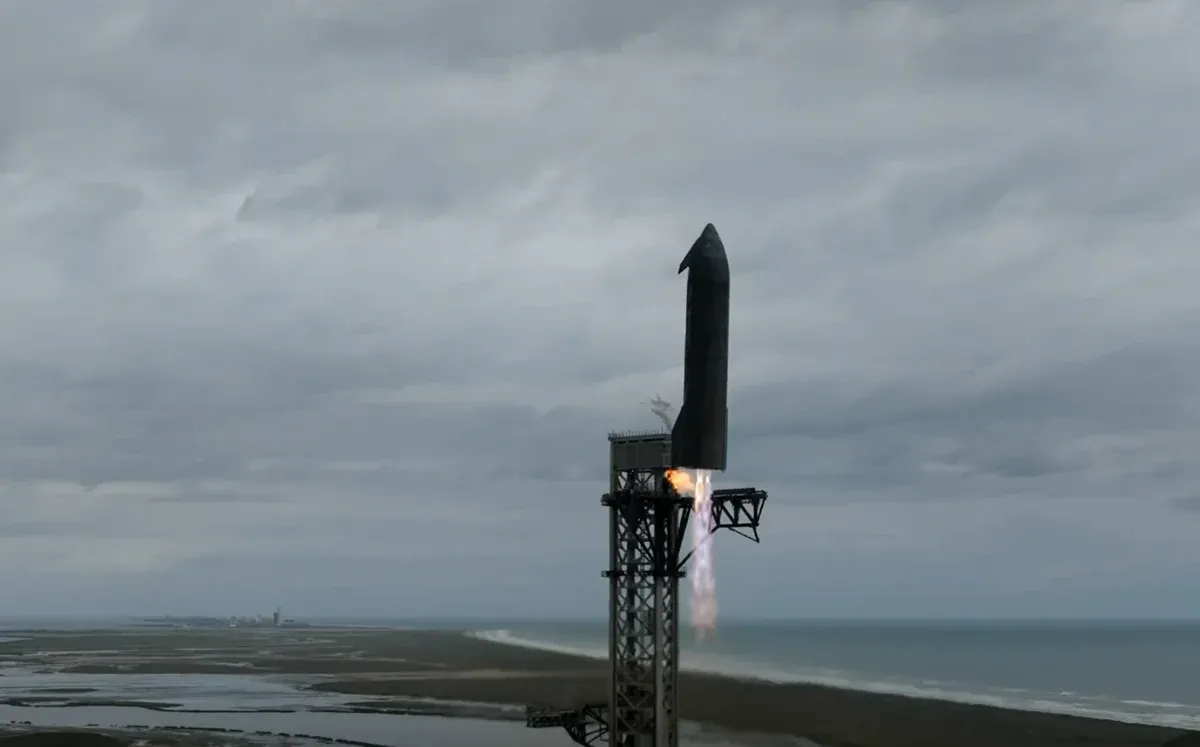 Photo: heise online
Key points
SpaceX caught its Starship upper stage with tower arms after 14 orbits, a first for the vehicle.
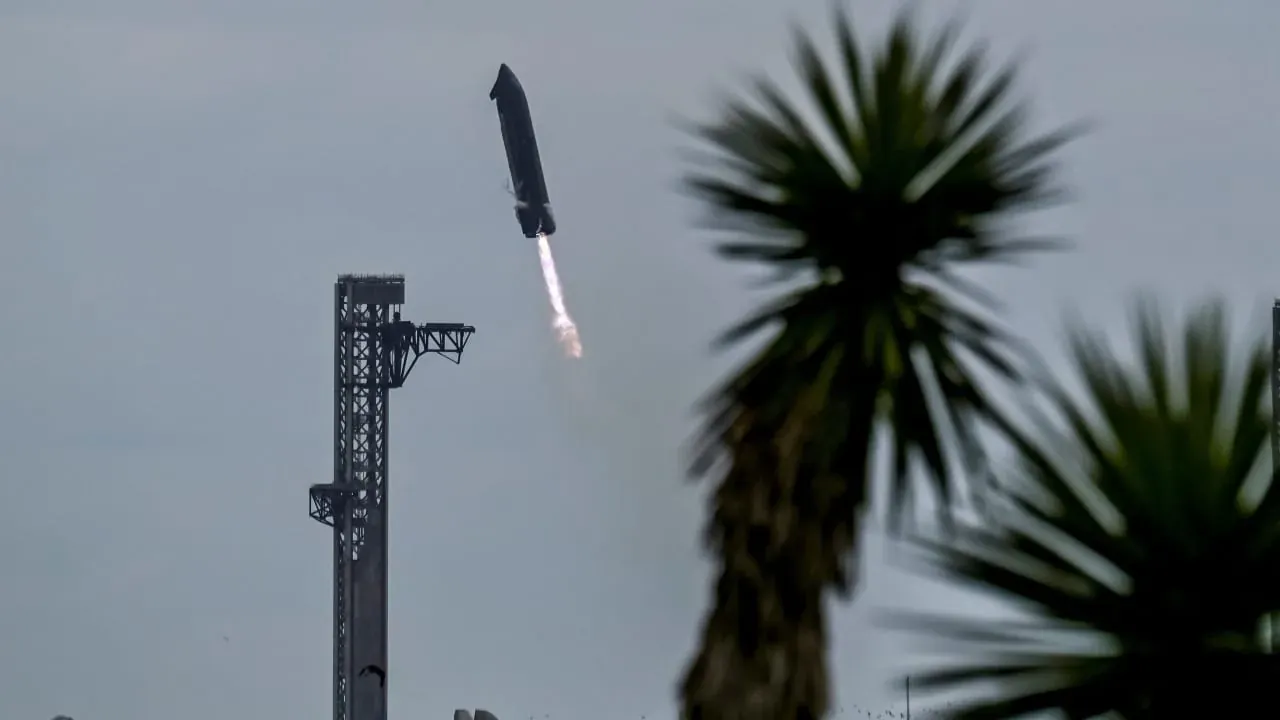
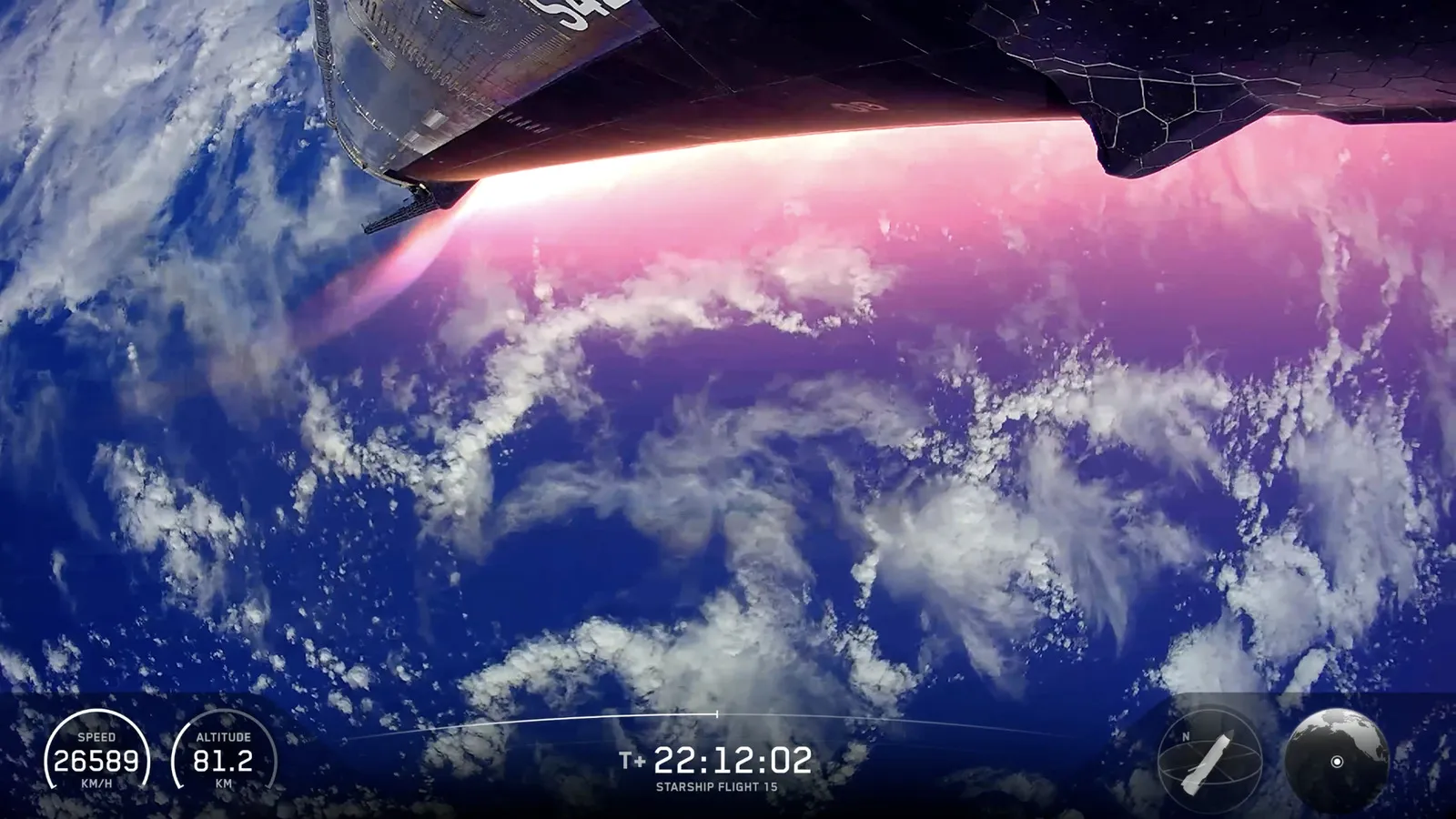
SpaceX caught the upper stage of its Starship rocket with the mechanical arms of its launch tower on 14 November, the first time the maneuver has succeeded on the vehicle. The catch came more than 22 hours after launch, following 14 orbits of Earth. The spacecraft descended to the launch site in Texas, slowed by a single engine, and was secured by the tower's 'chopstick' arms.
The catch is a milestone for the Starship program, which aims to make the entire rocket system fully reusable. SpaceX had previously recovered Super Heavy boosters with the arms on three occasions, but capturing the Starship spacecraft presented a greater challenge because it returns from higher altitude and greater speed. The success moves the company closer to lowering the cost of space missions and enabling more frequent launches.
A first for Starship
The flight was the 15th test of the world's largest and most powerful rocket system. During the mission, Starship deployed 26 Starlink satellites while traveling about 161 miles (260 km) above Earth. It then fired an engine to begin re-entry over the Pacific Ocean, traveling at about 17,000 miles per hour before slowing for descent.
SpaceX's official livestream accompanied the final descent with the 1977 hit song 'Baby Come Back'. Spectators along the Gulf of Mexico coastline near Starbase celebrated loudly. SpaceX spokesperson Dan Huot said: "That was the Holy Grail of spaceflight, plummeting through fire to be snatched out of the air by steel. We caught a Starship and now, everything changes."
The catch was not a complete success because the booster was not recovered. The planned catch of the Super Heavy booster was aborted, and the booster was destroyed over the Gulf of Mexico by the flight termination system. SpaceX cited a preliminary cause of an alarm about low propellant mass, with the exact cause still under investigation, according to heise online.
Booster failure
The booster failure means SpaceX did not bring back a fully intact rocket system after an orbital flight, which would have been another first. The company has previously caught boosters on three occasions, so the failure is not seen as insurmountable. SpaceX is still determining what caused the booster to abort its landing and detonate.
The Starship system consists of a Super Heavy booster about 72 meters long and an upper stage about 52 meters long, both designed for reuse. The program is central to Elon Musk's ambitions for rapid reusability, including plans to launch as frequently as once an hour. The vehicle is also expected to play a key role in NASA's Artemis program as a lunar lander.
NASA has committed $3.2 billion through a contract worth more than $4 billion awarded in 2021 for a lunar landing system. NASA is targeting 2028 for crewed lunar missions involving Starship and a separate lander from Blue Origin. A key remaining requirement is demonstrating fuel transfer between tanker spacecraft in orbit, essential for missions beyond Earth.
What comes next
Analysts welcomed the achievement but urged caution. Clayton Swope of the Center for Strategic and International Studies called it a "huge technical achievement" that proves the concept of a fully reusable Starship can work, but added: "Let's see how quickly they can do it again." Kathleen Curlee of Georgetown University said SpaceX needs "multiple repeated successes to prove the capability."
The next major test for Starship is demonstrating orbital refueling, a process needed for Moon and Mars missions. SpaceX has invested more than $15 billion in Starship's development. The company has already begun transitioning from its Falcon 9 rocket, with Starship essential for launching next-generation Starlink satellites and future orbital data centers.
The successful catch came after a series of setbacks in the program's history. In April 2023, the first complete Starship flew but remained intact for only minutes. A second attempt later that year exploded. In 2024, four flights followed, three successful. Last year, three Starship launches exploded, followed by two successful tests. The 15th flight was the fourth this year, according to heise online.
SpaceX is investigating the booster failure while celebrating the upper-stage catch. The company has not announced a date for the next flight. Musk had said on the third-quarter earnings call that "success is not guaranteed on these first flights, but I'd say it's more likely than not that this succeeds next flight,". The next flight will aim to repeat the catch and recover the booster.
Frequently asked questions
What did SpaceX catch on 14 November?
SpaceX caught the upper stage of its Starship rocket with the mechanical arms of its launch tower, a first for the vehicle. The catch came after 14 orbits and a 22-hour flight.
Why is the Starship catch significant?
It is a milestone toward fully reusable rockets, potentially lowering the cost of space missions. The catch proves the concept of a fully reusable Starship can work, though analysts note repeated successes are needed.
What happened to the booster during the flight?
The planned catch of the Super Heavy booster was aborted, and the booster was destroyed over the Gulf of Mexico. SpaceX cited a preliminary cause of an alarm about low propellant mass, with investigation ongoing.