SpaceX attempts first Starship upper stage catch after booster abort
SpaceX's Starship Ship aims for a first-ever chopstick catch on 14 November, after the Super Heavy booster aborted and exploded over the Gulf.
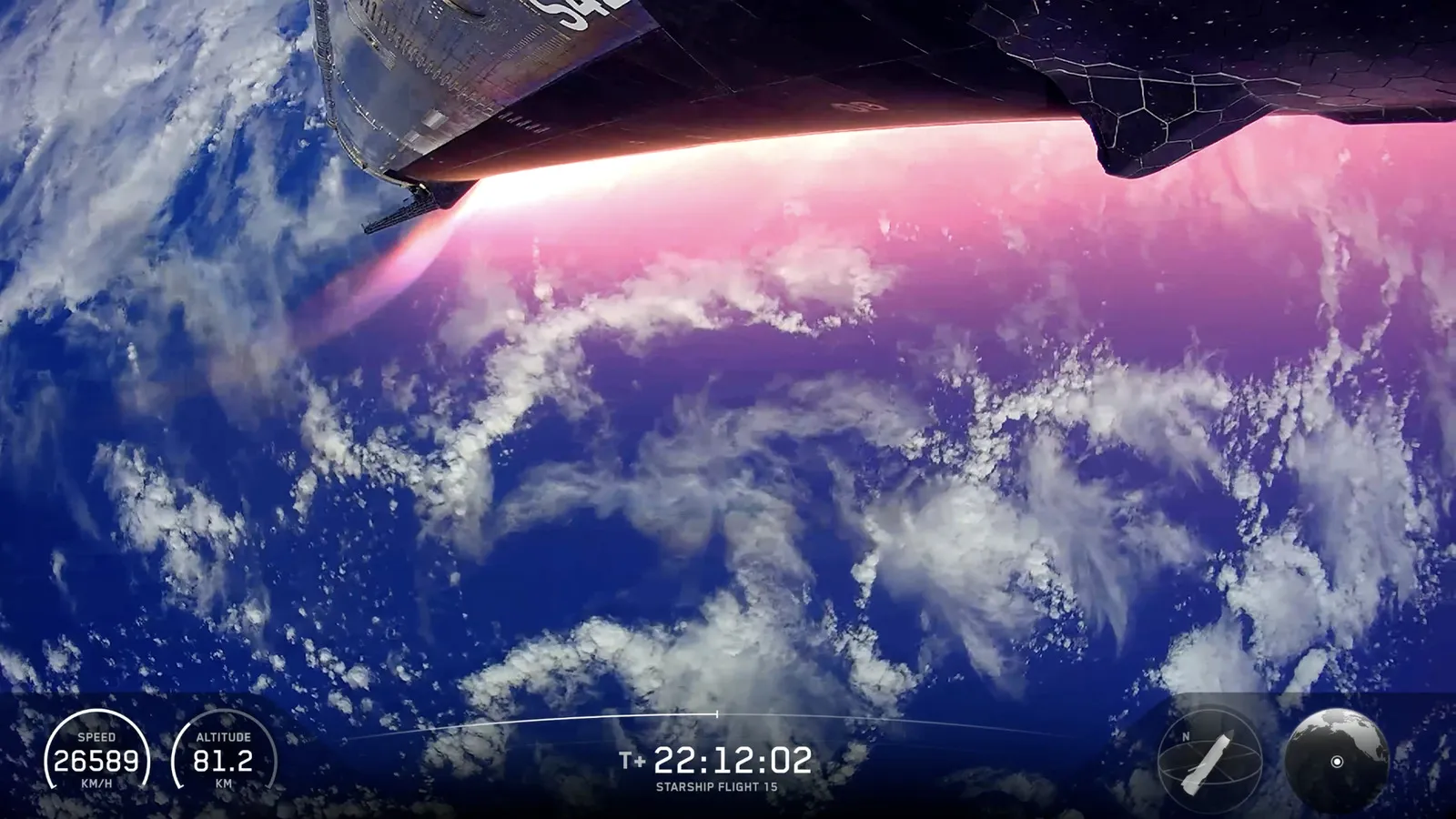 Photo: Engadget
Key points
SpaceX attempted to catch the Starship upper stage for the first time on 14 November, after the Super Heavy booster aborted its catch and exploded.
SpaceX attempted to catch the upper stage of its Starship rocket for the first time on 14 November, after the Super Heavy booster aborted its own catch attempt and exploded over the Gulf of Mexico. The Ship was scheduled to return to the Starbase launch site in Boca Chica, Texas, at about 15:18 local time (21:18 GMT), following a 22-hour flight that included 14 orbits of Earth.
The flight was the 15th test of Starship and the first that hoped to fully recover both parts of the rocket. SpaceX has caught and reflown V1 Super Heavy boosters a couple of times so far, but it has not yet tried to catch the Ship. The upper stage, which only reached orbit for the first time in September, has never been grabbed by the tower's chopstick arms.
Booster abort and explosion
The Super Heavy booster, designated V3, separated from the Ship after launch on 13 November. As it descended, its guidance, navigation and control system aborted the catch attempt. "The booster was not in the place that it was supposed to be to proceed with the catch," SpaceX spokesman Dan Huot said, adding that engineers were still investigating the root cause.
The booster diverted to the Gulf of Mexico just off the launch site, where it hovered above the water before exploding. The explosion occurred before the booster hit the water. SpaceX had caught the Super Heavy booster on three earlier test flights, but this time the automated abort was triggered, and the booster was destroyed.
The Ship, meanwhile, continued its journey in orbit, deploying 26 Starlink V3 satellites shortly after arriving in space on 13 November. The satellites are part of the Starlink constellation that provides high-speed internet. "Overall the ship's still looking healthy, and we are still on track for a catch attempt here at Starbase," Huot said on 14 November.
Ship's complex return
The catch of the Ship is extraordinarily complex because the spaceship falls much faster and from a much higher altitude than the booster. Like the three previous Super Heavy recoveries, the Ship is meant to carry out a controlled descent and nestle vertically between two mechanical chopstick arms at the launch site. The return path will see the Ship fly over lightly inhabited desert areas, weave over towns, and then carry out a "giant swoosh maneuver" in its final approach, looping around the cities of Texas' Rio Grande Valley and approaching its landing site from the east.
Flight control planned to make a decision on whether to proceed with the capture attempt about two hours before the scheduled return. "If you want to get back to the east coast of Texas, you have to fly over the entire continent to get back there. So inevitably, you're flying over land and we spend a lot of time figuring out the safest way to do that," senior SpaceX engineer Lars Blackmore said. "Once the rocket is flying over land, there's 21 minutes where the operators can't do anything, and so we're just going to be holding our breath for that time."
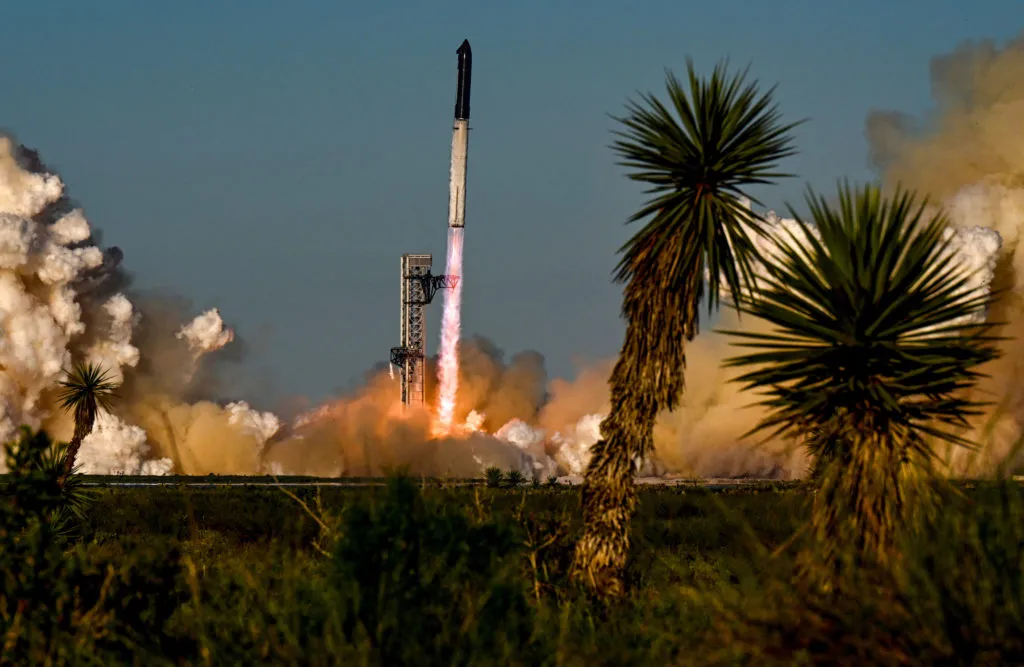
The 124-meter-tall (407-foot) rocket blasted off from the Starbase launchpad at 16:47 local time on 13 November. The plan was to grab the Super Heavy booster six and a half minutes later when it returned. A "go" was initially given by mission control for a catch attempt at the launch tower, but the booster activated an automated abort.
Stakes for Nasa and costs
SpaceX wants to make the top and bottom sections of Starship fully reusable so it can fly repeatedly and reduce costs. "Full reusability has the potential to fundamentally change the economics of accessing space," said Prof Malcolm Macdonald, president of the Royal Aeronautical Society. "One successful flight will not prove that model, but it could mark an important transition: from demonstrating that Starship can fly, to demonstrating how Starship could operate."
The progress of Starship has direct implications for Nasa's attempt to land humans on the Moon in 2028. Nasa has given SpaceX a contract to configure the Ship into a lander that will eventually take astronauts down to the lunar surface. Following SpaceX's stock market debut in June, which raised about $85.7 billion, the company is investing heavily in production and launch capabilities, and officials said it can now produce a spaceship every two weeks and a booster every four weeks.
Frequently asked questions
Why did the Super Heavy booster abort its catch attempt?
The booster's guidance, navigation and control system aborted the catch attempt because it was not in the place it was supposed to be to proceed with the catch, according to SpaceX spokesman Dan Huot. Engineers are still investigating the root cause.
What is the Starship upper stage catch attempt?
The Ship is designed to return to the launch tower and nestle vertically between two mechanical 'chopstick arms' at the Starbase site. It is the first time SpaceX has attempted to catch the upper stage, which falls much faster and from a higher altitude than the booster.
Why is full reusability important for SpaceX?
Full reusability has the potential to fundamentally change the economics of accessing space, according to Prof Malcolm Macdonald. It would allow the rocket to fly repeatedly and reduce costs, building on the success of the partially reusable Falcon rockets.