Judge allows Trump's $10 billion BBC defamation case to proceed
A federal judge in Florida on Tuesday allowed President Trump's $10 billion defamation lawsuit against the BBC to proceed, rejecting the broadcaster's bid to dismiss it.
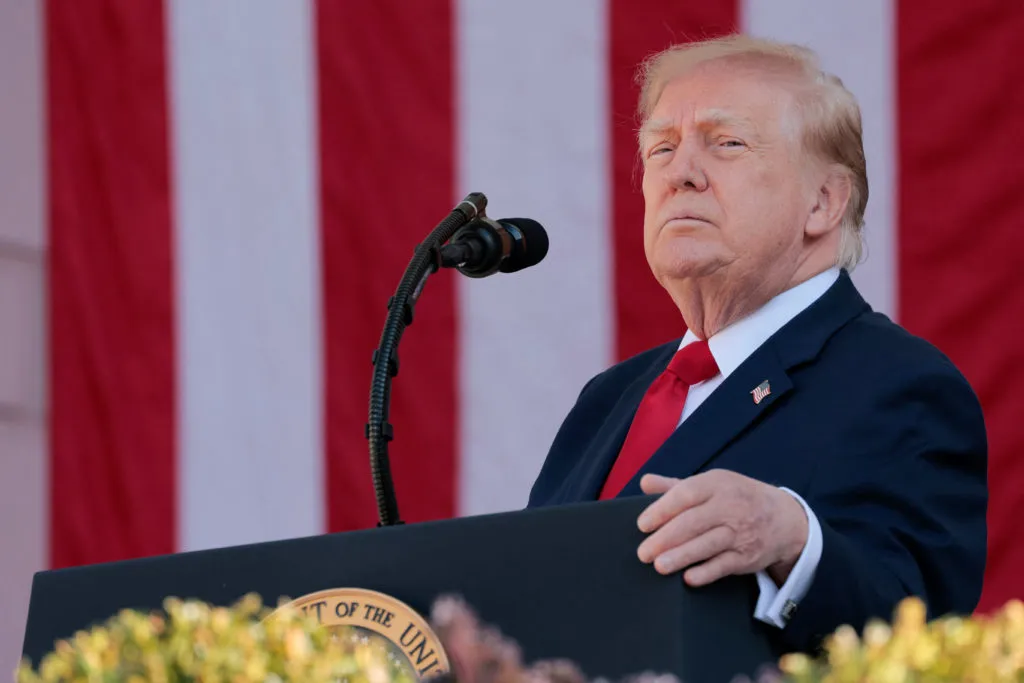 Photo: PBS NewsHour
Key points
A federal judge allowed Trump's $10 billion defamation case against the BBC to proceed, dismissing only a separate consumer-protection claim.
A federal judge in Florida on Tuesday allowed President Donald Trump's $10 billion defamation lawsuit against the BBC to proceed, rejecting the British broadcaster's bid to dismiss it. Judge Jeffrey T. Kuntz of the Southern District of Florida did not rule on the merits but dismissed a separate claim under Florida's Deceptive and Unfair Trade Practices Act.
Trump sued the BBC in December over its documentary "Trump: A Second Chance?" which aired a week before the 2024 presidential election. The program spliced together two portions of remarks Trump delivered roughly 55 minutes apart on Jan. 6, 2021, giving the impression he was encouraging supporters to storm the U.S. Capitol.
The documentary edit
The BBC acknowledged that filmmakers combined Trump's remark, "We're going to walk down to the Capitol … and I'll be there with you," with a later line: "And we fight, we fight like hell." The broadcaster apologized, saying the editing gave "the mistaken impression that Trump made a direct call for violent action."
The controversy prompted the resignations of BBC Director-General Tim Davie and news chief Deborah Turness. The BBC has denied Trump's claims that it defamed him, saying the edit was not evidence of fundamental bias and did not constitute defamation. In his ruling, Kuntz criticized the BBC's editing, writing: "Given the time disparity between the two statements, the distance itself tends toward a plausible inference that BBC knew or should have known that the segment they were creating would not and could not have been a truthful statement." He added: "This was not trimming around the edges but creating something different than what was stated in the speech."
The judge's reasoning
Kuntz also noted the BBC had the entire speech available for nearly three years by the time of the documentary. "Here, the news entity created the story," he wrote. "BBC admitted as much by confirming it had edited a video to make it appear as though President Trump made a statement he never made."
The judge dismissed Trump's second count alleging the documentary violated the Florida Deceptive and Unfair Trade Practices Act, finding the documentary did not qualify as "commercial speech" under the law. Trump is seeking at least $5 billion for defamation and at least $5 billion under the state law. Trump called the ruling a "Huge Victory against Fake News BBC" on Truth Social. "We will continue fighting against, and defeating, all of those who try to deceive the American People!" he wrote Tuesday evening.
Frequently asked questions
What did the judge rule in Trump's defamation case against the BBC?
Judge Jeffrey Kuntz allowed the defamation claim to proceed, rejecting the BBC's motion to dismiss. He dismissed a separate claim under Florida's Deceptive and Unfair Trade Practices Act.
Why is Trump suing the BBC for $10 billion?
Trump alleges the BBC defamed him through a documentary that spliced together quotes from his Jan. 6, 2021 speech, making it appear he urged violence. The BBC apologized for the misleading edit but denies defamation.