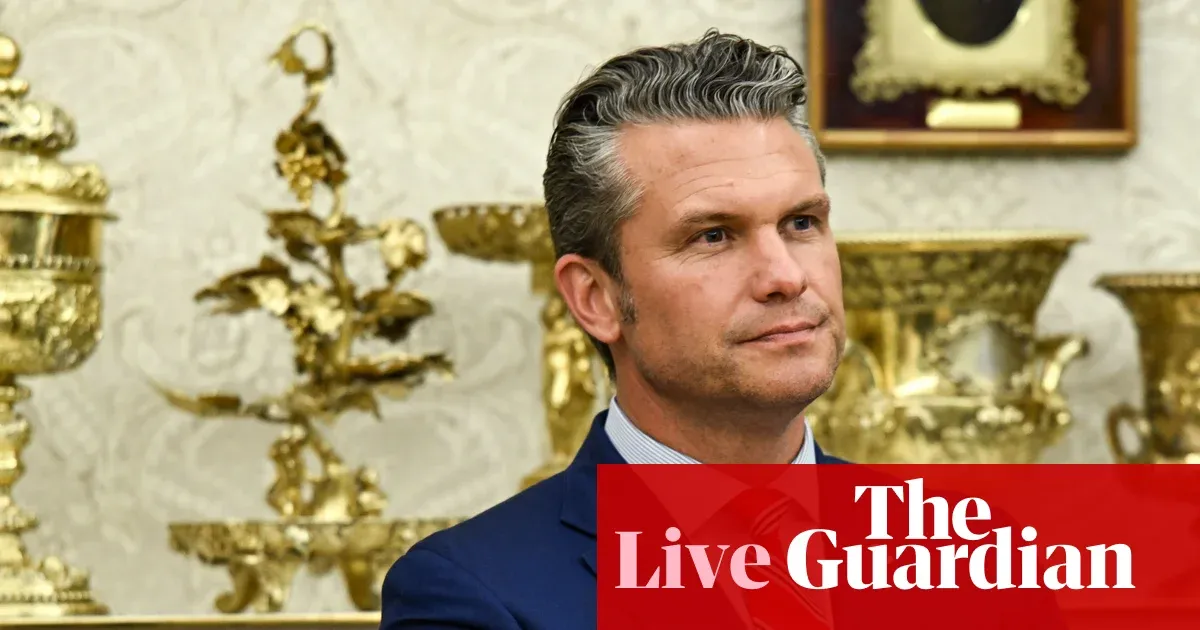
Trump sees positive momentum on Iran after Qatar PM talks
President Donald Trump hosted Qatar's prime minister on Monday and said the war with Iran is 'effectively over' with 'positive momentum' toward a deal.
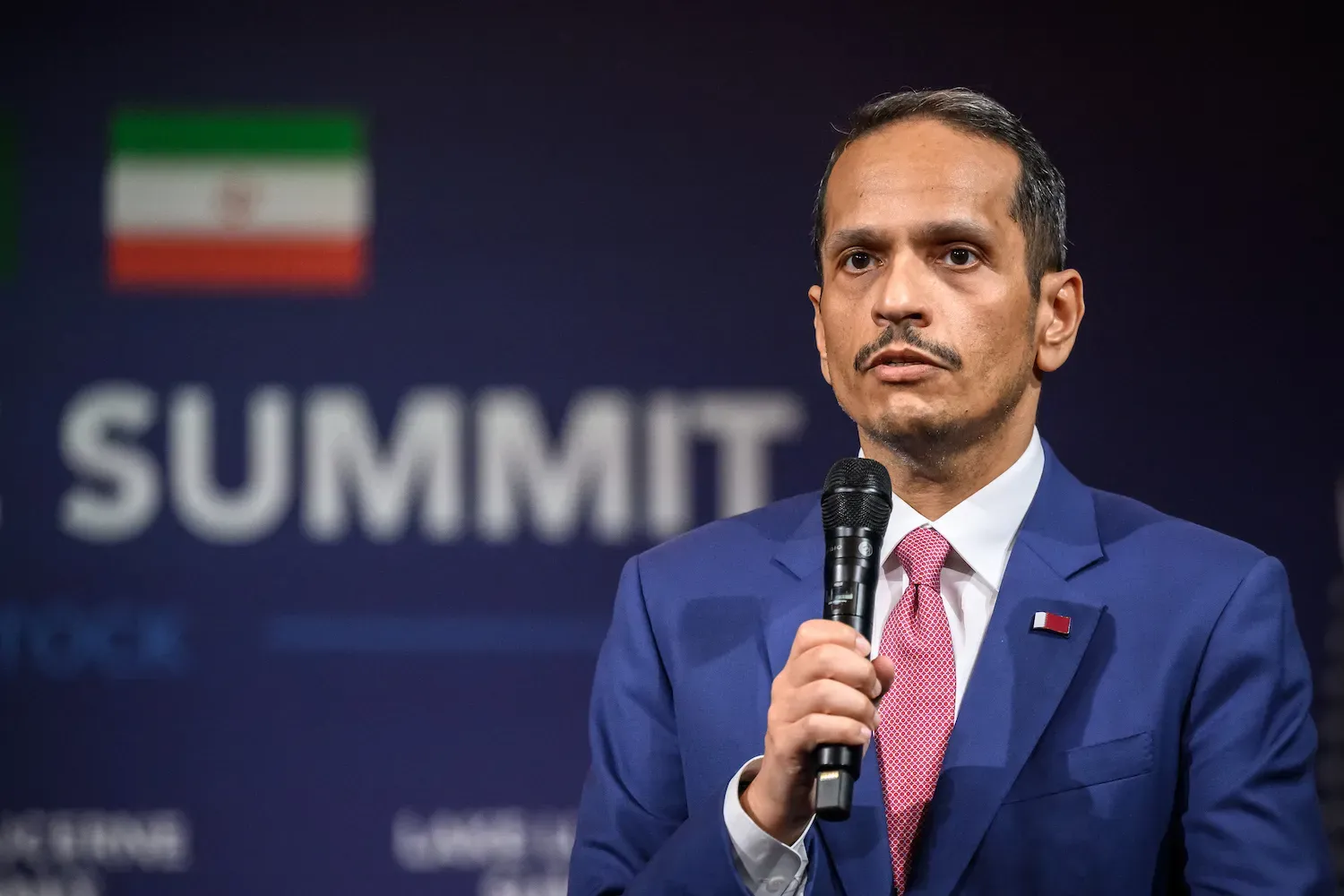 Photo: Foreign Policy
Key points
Trump told reporters after meeting Qatar's PM that the war with Iran is 'effectively over' and that he sees 'positive momentum' toward ending the conflict.
President Donald Trump hosted Qatar's Prime Minister Sheikh Mohammed bin Abdulrahman Al Thani at the White House on Monday as part of ongoing efforts to avoid a fresh round of US strikes on Iran. After the meeting, Trump told reporters he believes the war in Iran "militarily is effectively over," suggesting he is not prepared to resume the bombardment that caused reverberations across the global economy.
Trump made a surprise visit to the White House briefing room after meeting with the Qatari prime minister. "Iran militarily is effectively over," Trump said. "We're just keeping it the status quo." He added that Iran has been "decapitated" but said he is still looking to make sure there is a long-term solution to ensuring that Iran's nuclear programme is defanged.
What Trump said
In a posting on social media shortly before speaking to reporters, Trump asserted that Middle East allies — Qatar, Saudi Arabia, UAE, Bahrain, Kuwait and others — "would prefer the status quo." Minutes later, he sought to assure war-weary Americans that there was "positive momentum" and that he saw a "good chance" that the war "could get ended."
"They're talking to us, and they're talking very politely. And we'll see what happens," Trump said. He added, "The military action doesn't seem to be a very necessary thing, but we're locked and loaded, ready to go for any reason that changes." Trump, however, gave no hint of a drawdown of the thousands of US troops who have been shifted to the waters off of Iran and maintain a naval blockade to stem the flow of Iranian oil into the global market.
Secretary of State Marco Rubio tempered expectations for a deal, telling reporters on Sunday that some of Iran's demands were "outrageous and ridiculous." "I wouldn't say we're on the verge of a breakthrough," Rubio said before departing for the G7 meeting in Paris. "The president would always prefer to solve this and every problem diplomatically. Sometimes that's not possible, unfortunately."
Iran's conditions
Last week, Iranian officials announced, via Qatari mediators, a two-day plan to build mutual trust. Day one would have the US military lift its naval blockade on Iranian ports and release some of Tehran's frozen assets. In exchange, Iran would invite the International Atomic Energy Agency to send inspectors to its bombed nuclear sites. Day two would then see the Strait of Hormuz reopened, after which nuclear talks would resume.
There is a caveat, though: Washington must first agree to Tehran's seven conditions for ending the war, including canceling new US sanctions on Iran and reinstating US oil waivers. Iranian Foreign Minister Abbas Araghchi said Sunday that Tehran was waiting for Washington's response to its latest two-day proposal. "Meet the requirement, including end to war on all fronts, and you will see results," Araghchi said in an X post. "Or choose war, and see our alert and battle-hardened Warriors rain down hell."
Iranian state media accused the United States of firing "projectiles" at the strategic Qeshm Island in the Strait of Hormuz on Sunday. Tehran also issued a warning to the United States that same day. Such threats have made other Persian Gulf powers doubt the effectiveness of current peace talks. The region should "prepare for a long period of uncertainty in which neither a decisive resolution nor stable regional order can be taken for granted," senior Emirati official Anwar Gargash said on Monday.
What happens next
Qatar officials last week presented proposals on Iran's nuclear program, according to two Middle East government officials familiar with the matter who spoke on the condition of anonymity. The White House declined to comment, though Trump last week alluded to ongoing indirect talks with Tehran. The Trump administration is seeking upfront concessions on Iran's stockpile of highly enriched uranium as well as access for international inspectors, who have been barred from the country's main nuclear sites since US strikes in June 2025.
The US military, meanwhile, still has carried out limited strikes on Iran, including against its air defenses, and fired on and disabled a commercial ship Saturday that the US says was trying to breach its naval blockade on Iranian ports. Trump said in a phone interview Sunday that as long as the US sees progress in negotiations with the Iranians and they sign a "strong agreement," it's "highly unlikely it's going to be necessary" to resume strikes.
Middle East Eye reported Monday that Turkish intelligence chief Ibrahim Kalin said Qatar would host Vice President JD Vance and Mohsen Rezaei, the hard-line secretary of Iran's Supreme National Security Council, for talks next week. A senior Iranian official denied there were plans for a meeting, according to state broadcaster Press TV. The White House did not respond to Al-Monitor's request for comment.
The United Arab Emirates hosts two-day trilateral talks involving Russia, Ukraine, and the United States on Tuesday, Nov. 10. The meeting comes as Trump has said negotiations with Tehran were "going very well" and that he did not expect military action to be necessary, while stressing that American forces remained prepared to resume strikes if the situation changed.
Frequently asked questions
What did Trump say after meeting Qatar's PM?
Trump said the war with Iran 'militarily is effectively over' and that there is 'positive momentum' toward ending the conflict. He added that military action 'doesn't seem to be very necessary' but that the US remains 'locked and loaded'.
What are Iran's conditions for ending the war?
Iran's seven conditions include ending the US blockade on Iranian ports, lifting sanctions, unfreezing assets, issuing compensation for war damage, and ending hostilities throughout the region, including Israeli operations in Lebanon. Washington must agree before nuclear talks resume.
What is the two-day plan proposed by Iran?
Day one would have the US lift its naval blockade and release some frozen assets, in exchange for Iran inviting IAEA inspectors to its nuclear sites. Day two would see the Strait of Hormuz reopened, after which nuclear talks would resume.