Yotova leads Bulgaria presidential first round, runoff set for 1 November
Incumbent President Iliana Yotova won 35 to 36.5 percent in Bulgaria's first round on 25 October 2026, forcing a 1 November runoff against Andrey Gyurov amid turnout near 22 percent.
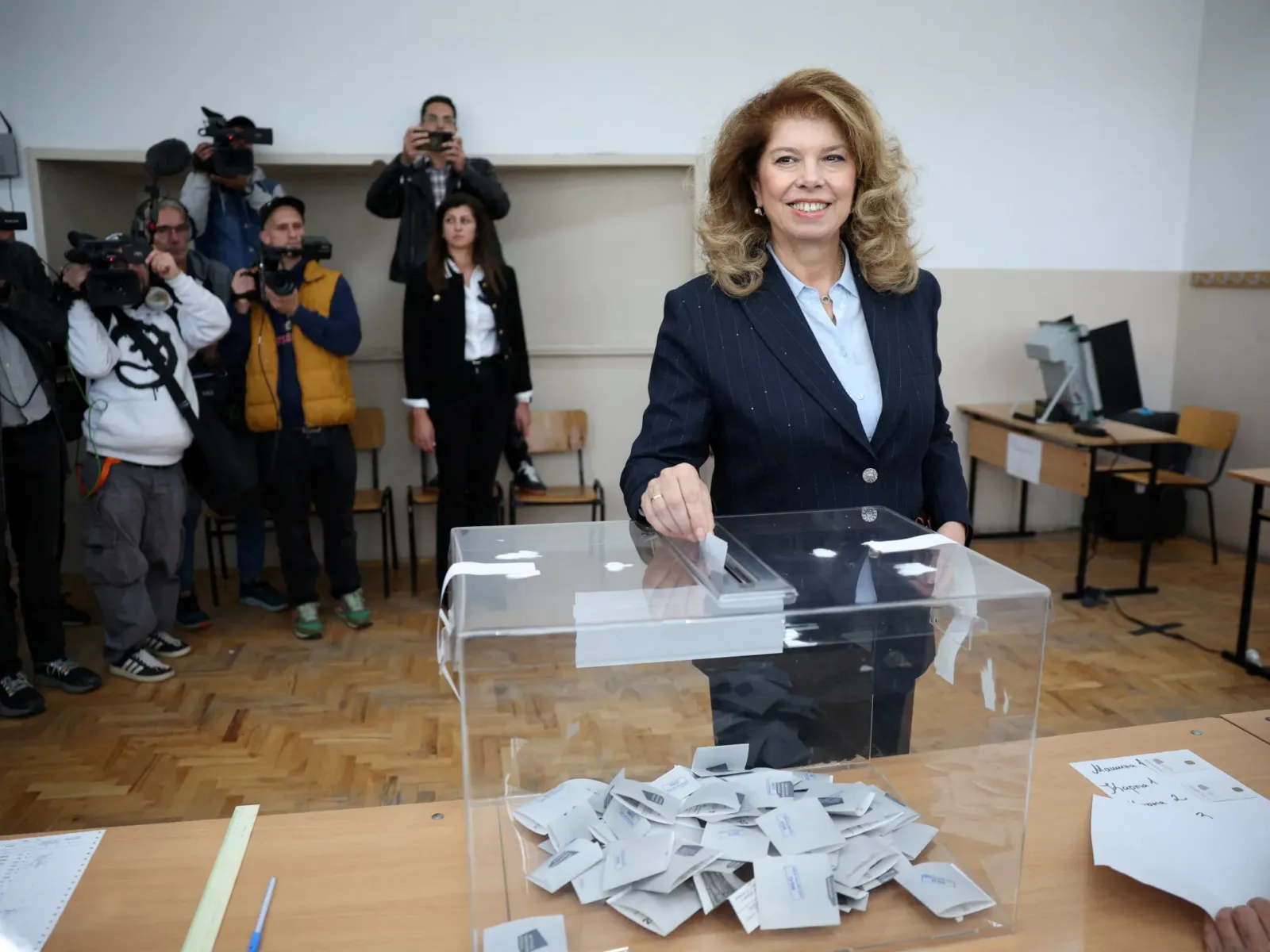 Photo: Al Jazeera
Key points
Bulgaria's presidential election on 25 October 2026 sent incumbent Iliana Yotova (35-36.5%) and Andrey Gyurov (31-33.5%) to a 1 November runoff, with turnout near 22%.
Bulgaria's presidential election on 25 October 2026 is heading to a run-off after no candidate passed the required threshold, with incumbent President Iliana Yotova taking 35 to 36.5 percent of votes and former caretaker prime minister Andrey Gyurov scoring 31 to 33.5 percent, according to exit polls. The second round is set for 1 November. Twenty-seven presidential candidates contested the first round in the European Union and NATO member state.
A first-round victory required turnout above 50 percent of registered voters and more than 50 percent of valid votes for a single candidate, and neither threshold was met. Turnout stood at 22.2 percent as of 8pm local time, according to the Measure polling agency, while Alpha Research estimated participation at 22.3 percent by 7pm. Polling analysis cited election fatigue after April's parliamentary vote and the fact that the presidential election was held separately from other contests.
Why no candidate won outright
An Alpha Research exit poll put Yotova and her running mate, Kiril Valchev, on 35.3 percent, and Gyurov and his running mate, Georgi Kandev, on 32.4 percent. Other agencies produced slightly different estimates, but all placed the two tickets in the lead with a narrow gap. These figures are preliminary; Bulgaria's Central Election Commission has yet to confirm the official result, and preliminary official results were expected to be published on Monday.
The estimates fell short of pre-election expectations for Yotova, who had been projected to win between 41 and 47 percent of the vote, while Gyurov had been polling between 28 and 31 percent. A Market Links poll published before voting had put Yotova well ahead. The tighter first-round result suggests the contest narrowed as voters weighed foreign policy, domestic economic pressures and the direction of the government.
Revival party leader Kostadin Kostadinov placed third, with his ticket receiving 12.6 percent in the Alpha Research exit poll, though other estimates were higher. Kostadinov has opposed military support for Ukraine, and Ukraine imposed a ten-year entry ban on him in 2022. His supporters could influence the run-off, but their votes should not be treated as a single bloc: some may back Yotova, others Gyurov, and some may stay at home.
Where the exit poll numbers came from
The campaign focused heavily on Russia's war in Ukraine, security concerns in the Black Sea, rising energy prices and inflation. Four vessels were struck off Bulgaria's coast in October 2026, leaving 21 people missing, in suspected spillover from the Russia-Ukraine war. Prime Minister Rumen Radev said the attacks appeared to serve Russian interests and summoned the Russian ambassador, while his government insists there is so far no evidence directly linking Russia to them.
Yotova favours dialogue with Russia and opposes military aid to Ukraine, while Gyurov, an economist and former deputy governor of the Bulgarian National Bank, is supported by pro-Western reformist parties and signed a security co-operation agreement with Ukraine as caretaker prime minister. Yotova became president in January after Radev resigned to enter parliamentary politics, having served as his vice-president for nine years, and is backed by Radev's Progressive Bulgaria party and the Bulgarian Socialist Party.
Campaign issues and Black Sea attacks
After casting her vote, Yotova said she wanted to address "the dire issue of poverty" in Bulgaria, alongside "inequalities and regional disputes", and added, "I believe that there must be peace, stability, and security." Gyurov said he wanted "a Bulgaria that looks forward, a country that is European, free, and proud", and invited Yotova to a debate before the next round.
The presidency is largely ceremonial, with executive authority resting mainly with the prime minister and parliament, but the president leads the armed forces, can veto legislation, signs international treaties and appoints ambassadors. A Yotova victory would leave the presidency and government in the hands of political allies, while Gyurov would represent a change at the top of the state.
If Yotova wins the run-off, she would become the first woman elected president in Bulgaria's history, in the country of 6.4 million people. The run-off on 1 November will decide whether she secures a five-year mandate of her own or whether Gyurov can turn his first-round showing into a change at the top of the state.
Frequently asked questions
Who is in the Bulgaria presidential run-off?
Incumbent President Iliana Yotova, who took 35 to 36.5 percent, faces former caretaker prime minister Andrey Gyurov, who scored 31 to 33.5 percent, in the second round on 1 November.
Why did Bulgaria's election go to a run-off?
A first-round win needed turnout above 50 percent of registered voters and more than 50 percent of votes for one candidate. Turnout was 22.2 percent as of 8pm local time, so neither threshold was met.
When is the Bulgaria presidential run-off?
The second round is set for 1 November, with preliminary official results from the first round expected to be published on Monday, according to exit poll estimates.