Cape Verde votes with first female candidate Joana Rosa
Cape Verdeans voted on 15 November in a presidential election that could deliver the nation's first woman president, with incumbent Jose Maria Neves favoured.
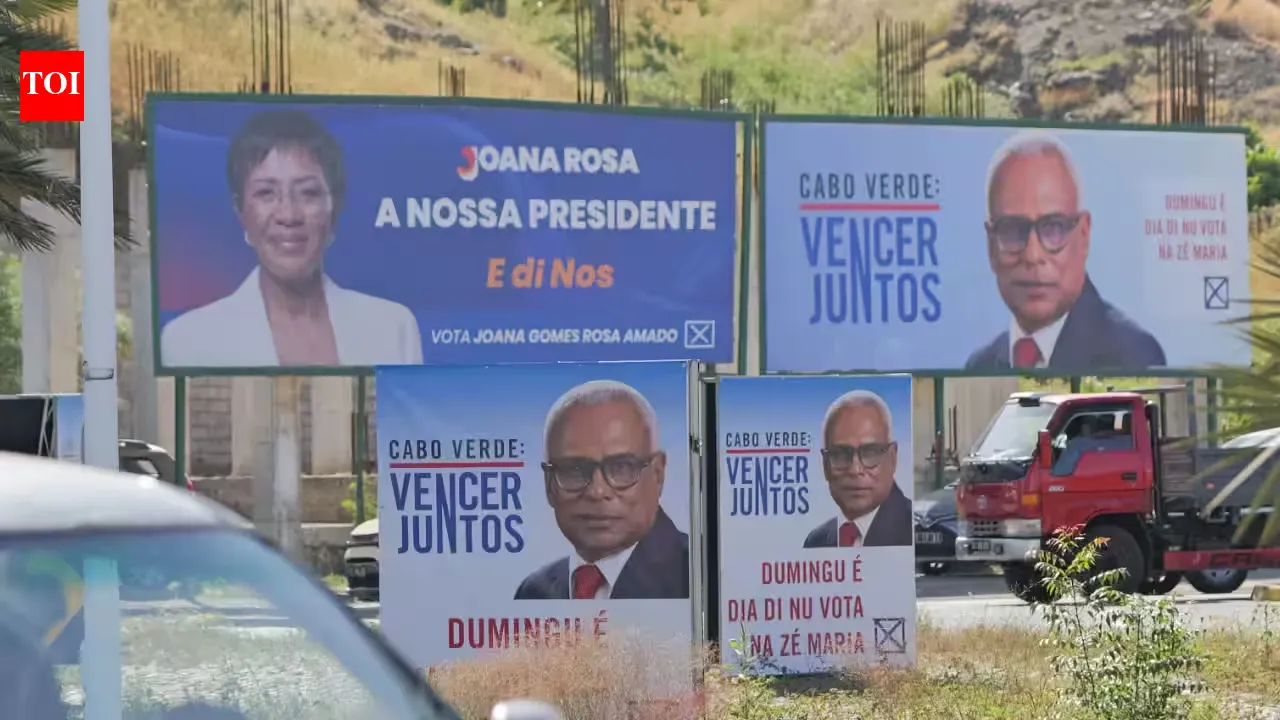 Photo: The Times of India
Key points
Cape Verde voted on 15 November in a presidential election that could deliver its first woman president, with incumbent Jose Maria Neves favoured.
Cape Verdeans voted on Sunday in a presidential election that could see the island nation elect its first woman head of state since independence from Portugal in 1975. Incumbent Jose Maria Neves is seeking a second term against former justice minister Joana Rosa, whose campaign has focused on the need for political balance and better opportunities for young people.
More than 300,000 people were eligible to vote from 8am to 6pm local time, choosing from six candidates. Polling stations were scheduled to close at 6 pm, with provisional results expected within two or three days. If no candidate secures more than 50% of the vote, the two leading candidates will face each other in a runoff on 29 November.
First woman candidate
Rosa, the candidate of the opposition Movement for Democracy (MpD), is the first woman to contest the presidency since Cape Verde gained independence in 1975. While women have held senior cabinet positions, the country has never had a woman president or prime minister. Her slogan is "Listen to Cape Verde," which she says "does not mean promising everything, but rather, knowing the real concerns and expectations of the population."
"The election of a woman to the presidency would show many young women and young girls that no government job is barred from them," she told the press. Rosa has called for policies that allow young people to build their futures at home rather than leave the country. She has campaigned around the idea that young people should "build their futures here at home and prevent the continued exodus of young Cape Verdeans abroad."
Neves, 66, belongs to the African Party for the Independence of Cape Verde (PAICV), which won a majority in May's parliamentary election, securing 37 of the 72 seats and ending a decade of MpD-led government. He served as prime minister for 15 years before becoming president in 2021. A Rosa victory would place the presidency and government in opposing political camps.
Emigration and youth
The election comes as the West African archipelago grapples with a steady exodus of young people seeking work abroad. With a population of around 500,000, Cape Verde has a larger diaspora overseas, particularly in the United States and Portugal. Nearly 77,000 Cape Verdeans living abroad are registered to vote, accounting for almost a fifth of the electorate.
Neves has pledged to build cross-party support to improve housing, healthcare and education, create jobs and raise wages. He has also promised to organise a youth summit during a second term. "In these times of international uncertainty, it is essential that Cape Verde continues to have a patriotic, experienced president capable of inspiring Cape Verdeans," he said this week during a meeting.
Under Cape Verde's parliamentary-presidential system, the prime minister holds most executive authority, while the president has veto powers and a mediating role. The head of state appoints the prime minister based on the results of legislative elections and represents the country abroad. The country is known for its stability in a politically volatile region.
What happens next
Many voters feel distant from the political class over concerns that it doesn't understand their daily difficulties, Roselma Evora, a professor of political science and gender studies at the University of Cabo Verde, told The Associated Press news agency. Among the population's major concerns are the increased cost of living, fuel prices and youth unemployment.
In July, Cape Verde was officially classified as an upper-middle income country by the World Bank due to economic growth in the tourism sector and a 16.8 percent increase in gross national income per capita between 2023 and 2024. However, the country faces persistent social inequality, geographic isolation and a lack of affordable options for travelling between islands.
If elected, the main candidates have promised to implement measures to improve air and sea travel between the islands and also to construct new accommodation for tourists. Provisional results are expected within two or three days, with a runoff scheduled for 29 November if no candidate secures more than 50% of the vote.
Frequently asked questions
Who is the first female presidential candidate in Cape Verde?
Joana Rosa, a former justice minister and candidate of the Movement for Democracy (MpD), is the first woman to run for president since independence in 1975.
When will Cape Verde's presidential election results be announced?
Provisional results are expected within two or three days after voting on 15 November. If no candidate wins more than 50%, a runoff is set for 29 November.
Why is emigration a key issue in the Cape Verde election?
Cape Verde has a population of about 500,000 but a larger diaspora abroad. Many young people leave due to a lack of jobs, and candidates have promised measures to encourage them to stay.