NTSB finds Learjet elevator pieces six kilometres from crash site
Investigators found most of the left elevator in three pieces up to 6.1 kilometres from the Florida crash, confirming the plane broke apart before impact.
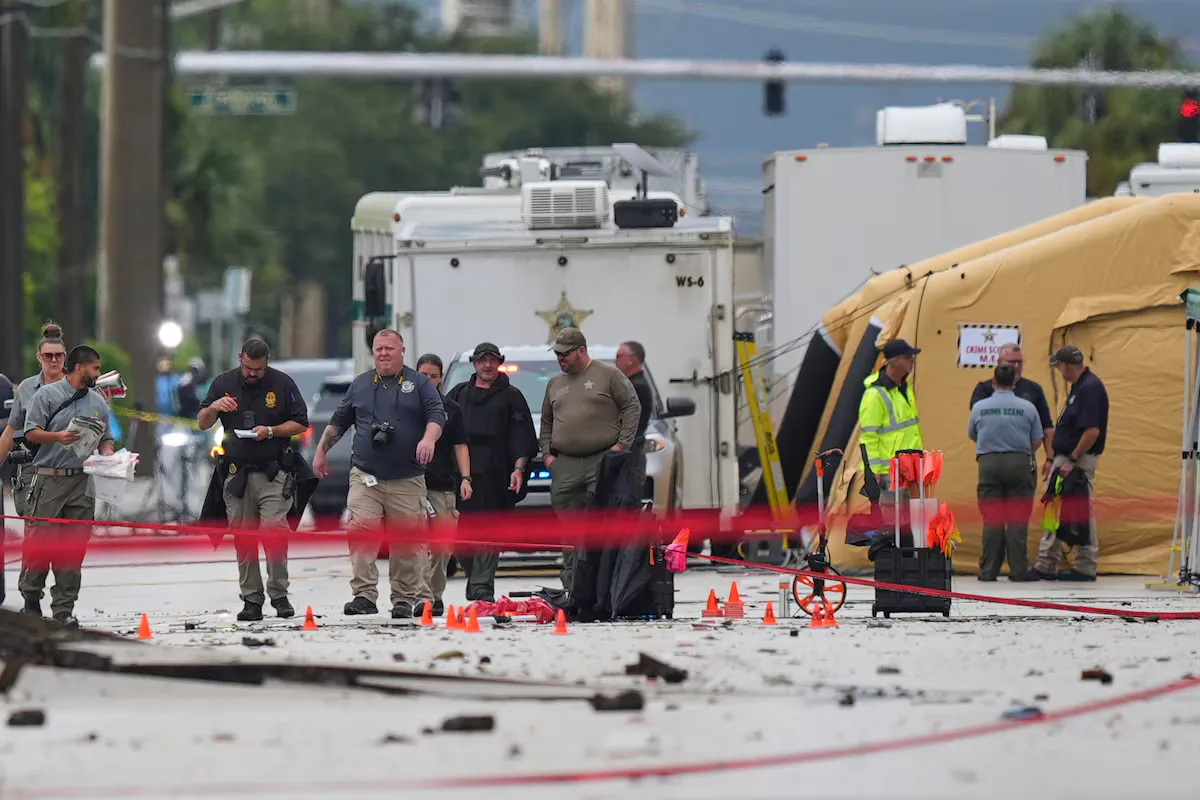 Photo: The Globe and Mail
Key points
Investigators found most of the Learjet's left elevator up to 6.1 kilometres from the crash site, confirming the plane broke apart before impact.
A piece of the Learjet that crashed in Florida, killing all nine people aboard, was found over six kilometres from the impact site, investigators said on Tuesday, confirming the plane was breaking apart before it hit the ground. National Transportation Safety Board member Tom Chapman said most of the left elevator – part of the tail that controls the plane's pitch – was found in three pieces between two kilometres and 6.1 kilometres from Greenacres, near West Palm Beach, where the jet went down on Sunday afternoon.
“What that means exactly, in terms of what caused the aircraft to lose control, or whether the loss of this piece was a result of the forces on the aircraft, we don’t know yet,” Chapman said at a news conference. Without the elevator intact, the pilot would not have been able to pull the Learjet out of its nosedive, Chapman said. “At those speeds I don’t know that it would’ve been effective even if it had still been attached to the aircraft, but knowing that it was lost is a very important piece of evidence in terms of pointing us toward other things to investigate.”
What the elevator loss means
The pieces that broke off the plane were probably a byproduct of the nosedive, not the cause, aviation safety expert Jeff Guzzetti told The Associated Press. Their discovery within a few miles of the crash site suggests the elevator components fell off closer to the ground, he said. “If those parts would have broken off at altitude, those pieces would be a lot farther away,” Guzzetti said. The finding narrows the timeline of when the aircraft began to fail.
The Learjet 60 took off from Austin, Texas, and was headed for the Bahamas. The victims included technology entrepreneur Adam Robinson, his wife, Helen Sharp, and their two young children, relatives said. The family's nanny, Ana María Ramírez Cetina, was also killed. In a joint statement, the families of the passengers killed in the crash said that Cetina cared for the Robinson's children “with tenderness and devotion, and she was truly part of the family.” Cetina, they said, “showed us a legacy of unconditional love and devotion.”
The government in Cetina's native Colombia said it was providing assistance to her family. “Her premature departure fills us with sadness,” Colombian President Abelardo de la Espriella wrote in Spanish on X. “I send a heartfelt embrace to her family, friends, and loved ones, along with my full solidarity during this difficult time.” The plane's captain, Jeff Gregory, 55, lived in the Philadelphia suburbs. He was a longtime aviator, husband, father and devout Christian.
Victims and the crew
As the plane plunged, a man's voice could be heard reciting prayers in the background of the co-pilot's final radio transmissions to air traffic control. Friends are convinced it was Gregory. Thomas Noetzel, the director of operations at the company that operated the flight, Upper Jets, organized an online fundraiser to support Gregory's wife and children. Gregory was a close personal friend and “knowing him has made me a better person,” Noetzel wrote on the fundraising website GoFundMe.
The Learjet hit the ground with enough force to create a crater before bursting into flames. About 600 nearby residents remain displaced, but only one person on the ground was reported injured. Investigators have been scouring the area for wreckage, collecting dashcam video and speaking to witnesses. After days of heavy rain, they plan to access the crater on Wednesday and expect to find critical components of the plane.
Chapman reasserted Tuesday that weather was a focus of the investigation. Co-pilot Nathalia Gadelha Filgueiras' stepfather, Thiago Corteleti, told the New York Post that she texted her boyfriend about 10 minutes before the crash, telling him: “I’ve got turbulence, I’ve got ice.” In the last two minutes of the flight, Filgueiras shifted from calmly communicating with air traffic controllers to calling out terrifying updates as the plane plummeted.
Weather focus and next steps
She told them ice was accumulating on the plane and that turbulence had thrown it up and down by more than 210 metres. “We’re going to crash into the ground,” she said, as the jet descended at a rate of more than 6,100 metres per minute. And then, before the transmission cuts off: “We’re out of time!” A preliminary NTSB report will be released in about a month, but it will likely take more than a year to determine the probable cause of the crash.
Frequently asked questions
What did investigators find miles from the Florida Learjet crash site?
Most of the left elevator, a part of the tail that controls pitch, was found in three pieces between 2 and 6.1 kilometres from the crash site, confirming the plane broke apart before impact.
Why is the elevator loss important to the investigation?
Without the elevator intact, the pilot could not have pulled the Learjet out of its nosedive, according to NTSB member Tom Chapman. The discovery helps investigators focus on other factors.
What did the co-pilot report before the crash?
Co-pilot Nathalia Gadelha Filgueiras texted about turbulence and ice, and told air traffic controllers ice was accumulating and turbulence had thrown the plane up and down by more than 210 metres.