French police clash with rioters as 320,000 march nationwide
About 320,000 people marched across France on 31 October 2026 in a third wave of protests over living costs, with police arresting 565 as evening clashes erupted in Paris, Marseille and Lyon.
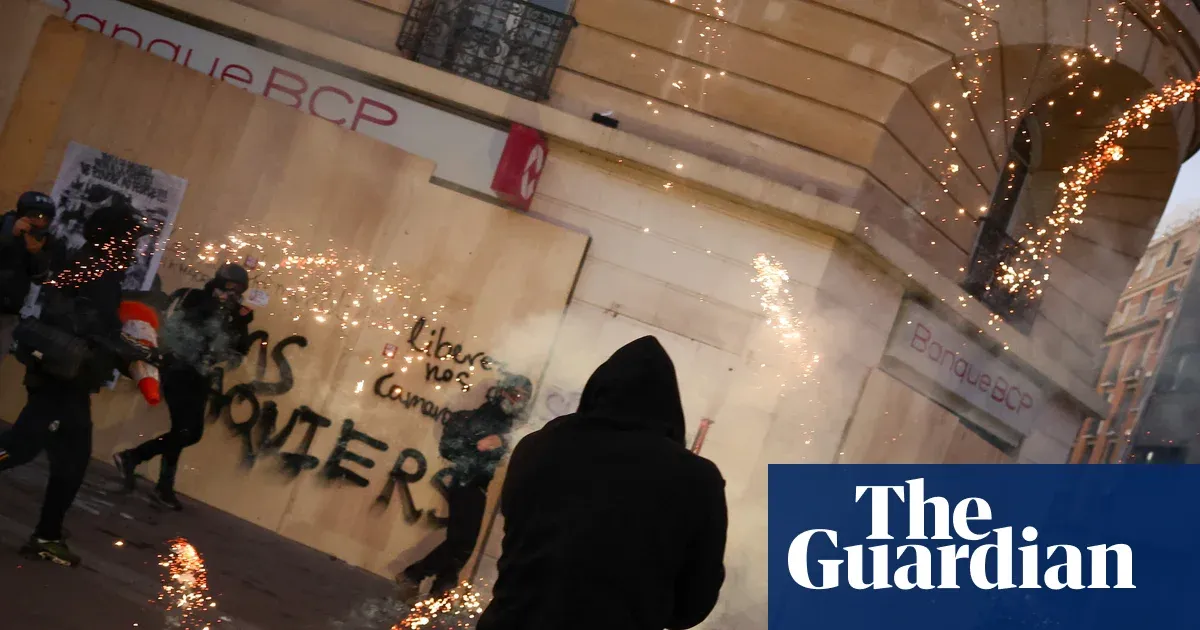 Photo: The Guardian
Key points
About 320,000 people marched across France on 31 October 2026 in largely peaceful protests that turned to clashes in several cities as evening fell, with 565 arrested.
French police clashed with masked rioters in Paris, Marseille and other cities on 31 October 2026, after tens of thousands of demonstrators marched across France in a third wave of protests over the cost of living and deteriorating public services. The interior ministry said about 320,000 people took part nationwide, including 70,000 in Paris, and police arrested 565 people across the country as evening fell and largely peaceful marches ended.
The scale of the day matters because it shows both the reach and the limits of the movement. The interior ministry's figure of 320,000 was down from an estimated 410,000 the previous weekend, yet the third consecutive Saturday of marches still drew crowds to France's largest cities. Interior Minister Laurent Nuñez said about 150 planned demonstrations had passed off peacefully, while warning that police faced an "extraordinary" level of violence from some rioters as rallies ended.
What the day's numbers show
Nuñez said one riot police officer had been hit by a molotov cocktail in Paris, an incident he described as an "attempted murder", and added that police were "fully prepared for those looking for confrontation tonight". He had said earlier in the week that 70,000 police and gendarmes, including elite units, would be deployed, warning that 31 October looked like "a very high risk" day. France deployed 70,000 police officers nationwide.
As evening approached and marches concluded, police in several cities fired teargas and stun grenades to disperse crowds joined by groups of masked rioters. In Paris, dozens of masked people dressed in black used hammers to pry up paving stones near the Porte de Charenton and hurled them at police, and at least one incendiary device was thrown at security forces. The Paris police prefecture said "a hardcore of several hundred rioters" had attacked police with projectiles.
In Lyon, protesters threw projectiles at police, prompting officers to fire teargas. In Toulouse, police used water cannon against an unauthorised protest that drew several thousand people, mostly young demonstrators. In Marseille, demonstrators clashed with police. The interior ministry said late on 31 October that police had arrested 565 people nationwide, with four police officers and one gendarme injured in Paris. Authorities reported more than 560 arrests by Saturday night.
Where the violence erupted
The Paris march set off peacefully from the Porte de Bagnolet near the ring road, with protesters in Halloween fancy dress holding placards reading "No need for teargas to make our future look bleak" and "Disguised as an angry citizen for Halloween", as a helicopter flew overhead. The marches brought together school students who have campaigned for better conditions for a month, trade unions and gilets jaune protesters united in anger at the cost of living, widening inequalities and Emmanuel Macron's government.
Protester Jérôme Rodrigues, on the Paris march, said the economy was failing ordinary families: "The French economy is doing badly no matter what happens, because today we're being run by a group of incompetents who juggle billions while families are struggling with a few cents." In Nantes, Camille Guérin said: "We say no to the cost of living, no to the far right, yes to high school students' demands, yes to giving citizens a voice."
The movement broadened after a security clampdown and serious injuries to some protesters, adding demands for greater protection of civil liberties and the right to protest to its original focus on rising costs, inequality and deteriorating learning conditions. Student protesters complained that police did not authorise a march through the centre of Paris. The eurozone's second-largest economy is on the brink of recession and under pressure to rein in its debt, limiting the government's room to spend its way out of the discontent.
What protesters demanded
Protests also spread across Europe on the same day. In Germany, police fired water cannon and teargas to disperse youth-led protests organised by "Gen Z regelt!" in dozens of cities, with at least two stores looted in Frankfurt. In Italy, police carried out 60 searches across 23 cities targeting people suspected of inciting violence, according to news agency ANSA. Other cities including Rome, Milan and Berlin also saw youth-led marches.
The unrest comes with presidential elections less than six months away and far-right leader Marine Le Pen leading the polls. Shopkeepers prepared by barricading their businesses, and Alain Di Crescenzo, president of France's chamber of commerce, said: "Shopkeepers can't wait for Saturday to be over." Student protesters vowed to stage new high school and university blockades on Tuesday and Thursday.
What comes next
Sabrine Kharbach of the Union Étudiante, a student organisation, said the blockades would be followed by a larger march: "Then we will join the 5 November demonstration called by workers and trade unions." That 5 November demonstration, called by trade unions, is the next dated event on the protest calendar after the blockades planned for Tuesday and Thursday.
Frequently asked questions
How many people protested in France on 31 October 2026?
The French interior ministry said about 320,000 people took part in rallies nationwide, including 70,000 in Paris. Student unions put the figure at half a million, including 200,000 in Paris. The ministry figure was down from an estimated 410,000 the previous weekend.
Why did protesters take to the streets in France?
The marches brought together school students, trade unions and gilets jaune protesters angry at the cost of living, widening inequalities and deteriorating public services. The movement later added demands for greater protection of civil liberties and the right to protest.
What happens next after the 31 October protests?
Student protesters vowed to stage new high school and university blockades on Tuesday and Thursday, then join a 5 November demonstration called by workers and trade unions, according to Sabrine Kharbach of the Union Étudiante.