Lula wins record fourth term in Brazil runoff election
President Luiz Inácio Lula da Silva won Brazil's runoff election on 25 October 2026, defeating senator Flávio Bolsonaro after a Supreme Court-ordered two-hour voting extension and a tight count.
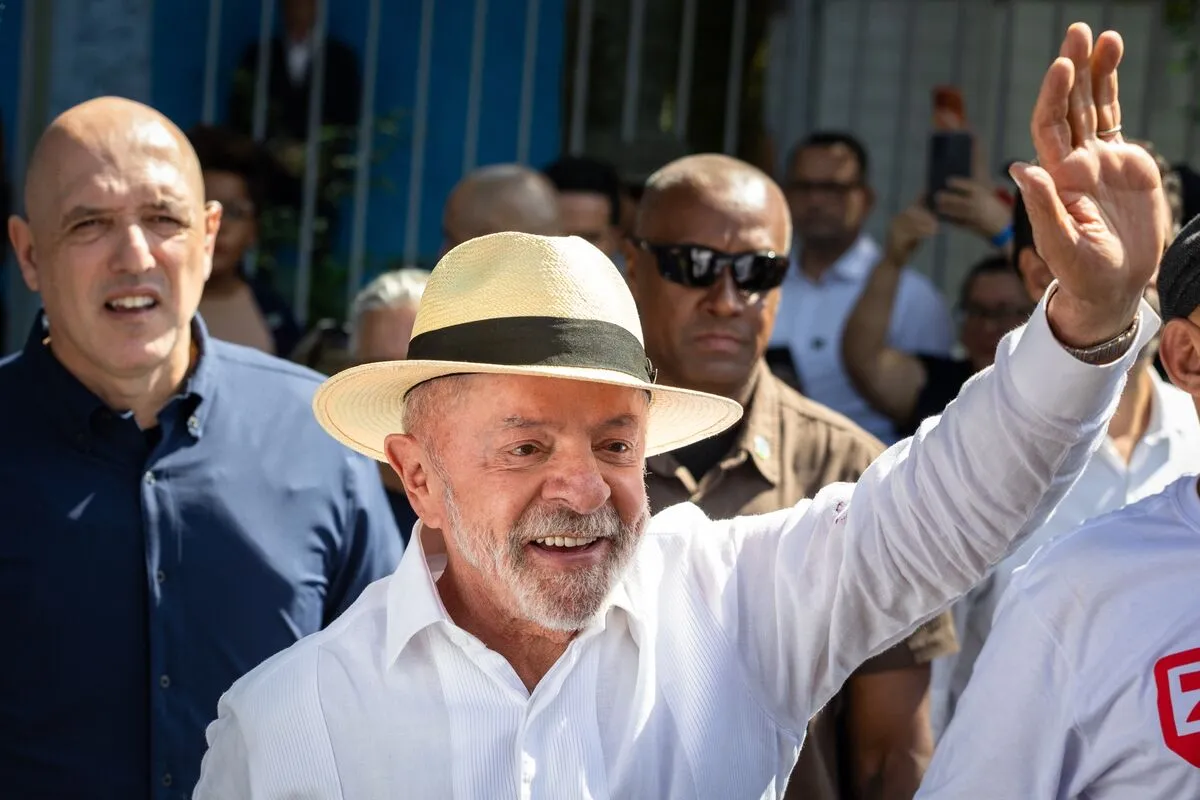 Photo: Bloomberg
Key points
Lula won Brazil's presidential runoff on 25 October 2026, defeating Flávio Bolsonaro after a tight count disrupted by a two-hour voting extension.
President Luiz Inácio Lula da Silva won Brazil's runoff election on 25 October 2026, defeating senator Flávio Bolsonaro and securing a record fourth term. Lula, 80, came from behind in the count to halt a right-wing wave sweeping Latin America, according to Bloomberg's report published 25 October 2026. The result defied predictions that the political veteran had reached the end of his career.
The runoff pitted the left-wing incumbent against Flávio Bolsonaro, 45, son of former president Jair Bolsonaro, who is serving a 27-year prison sentence for plotting a coup.
Why the extension mattered
Brazil's Supreme Court Justice Cristiano Zanin extended voting by two hours, to 7 p.m. local time (2200 GMT), after Lula's campaign alleged public bus services had been reduced, blocking voters from reaching polling stations. A court in Bahia ordered the arrest of a top transportation official in Salvador over allegations he directed a reduction in the city's bus fleet. Lula said 40% of buses in São Paulo had been kept out of service.
Flávio Bolsonaro's team also requested extensions in at least three states, citing bad weather. Zanin's ruling landed near the original 5 p.m. cutoff, creating confusion as some polling stations had already closed. Because Brazil uses electronic voting machines, closed stations could not be reopened. The electoral court, or TSE, paused the count for two hours, adding uncertainty to the process.
The count swung repeatedly. With 5% of votes counted, Lula led with 51% to Bolsonaro's 48.87%. At 13.5%, Bolsonaro edged ahead with 50.01% to Lula's 49.99%. With over 20% of tallies reported, Bolsonaro led with 50.02% to Lula's 49.98%. Lula then moved back ahead, taking 50.92% to Bolsonaro's 49.08% with 69.92% of ballots counted, and 51% to 48.9% with nearly 75% counted.
Where the count swung
Lula's main path to victory was raising turnout, after abstention reached a record high in the first round. With 24.4% of polling stations counted, abstention stood at 19.38%, down from 21.08% in the first round. Abstention usually rises in Brazilian runoffs, with 2022 the only exception. Polls showed the two neck-and-neck after Bolsonaro beat Lula by 2.2 million votes in the first round, and 33 million voters who did not vote then could prove decisive.
Brazilians in Germany backed Lula with 79.09% of ballots cast by 20,923 voters, up from 71.9% in the first round, according to figures posted by Brazilian embassies. Berlin gave Lula 88.77%, while Frankfurt was Bolsonaro's strongest city at 29.03%. Turnout rose from 19,322 in the first round, though only about half of 41,552 eligible voters in Germany voted. Globally, some 918,900 voters were eligible.
Congressman Nikolas Ferreira said the extension only helped whoever was losing, and that Justice Zanin wanted to disrupt the election. Campaign chief Rogério Marinho called the ruling an intervention. Constitutional lawyer Vera Chemim said the losing side might contest the outcome. Eduardo Bolsonaro questioned the legal basis on YouTube. Lula had asked for extensions in at least nine states, while Bolsonaro's team cited weather in three.
What happens next
The dispute carries the memory of 2022, when Jair Bolsonaro refused to concede defeat to Lula and his supporters invaded government buildings. Bolsonaro received a 27-year prison sentence for plotting a coup. A report revealed a campaign within Trump's State Department to help return the Bolsonaros to power, though Trump declined to endorse a candidate, saying only that the United States was watching.
The count resumed after the two-hour pause, with Brazil's electronic voting system allowing a final result within hours. Lula's hotel erupted in screams of joy as he took the lead, while Bolsonaro's headquarters celebrations faded. Hundreds of Lula supporters camped on Paulista Avenue. The next step is certification of the result by the electoral court, or TSE, following the 25 October 2026 runoff.
Frequently asked questions
Who won Brazil's presidential runoff?
President Luiz Inácio Lula da Silva won Brazil's runoff election on 25 October 2026, defeating senator Flávio Bolsonaro and securing a record fourth term.
Why was voting in Brazil extended by two hours?
Supreme Court Justice Cristiano Zanin extended voting to 7 p.m. local time after Lula's campaign alleged bus services were reduced, blocking voters from reaching polling stations.
How close was the count in Brazil's runoff?
With over 20% of tallies reported, Bolsonaro led with 50.02% to Lula's 49.98%. Lula later moved ahead, taking 50.92% to 49.08% with 69.92% counted.