Romanian parliament backs Niculescu government with 280 votes after five months
Romanian lawmakers confirmed Luca Niculescu as prime minister on 20 October 2026 with 280 votes in favour, ending five months of political crisis under a six-month coalition truce.
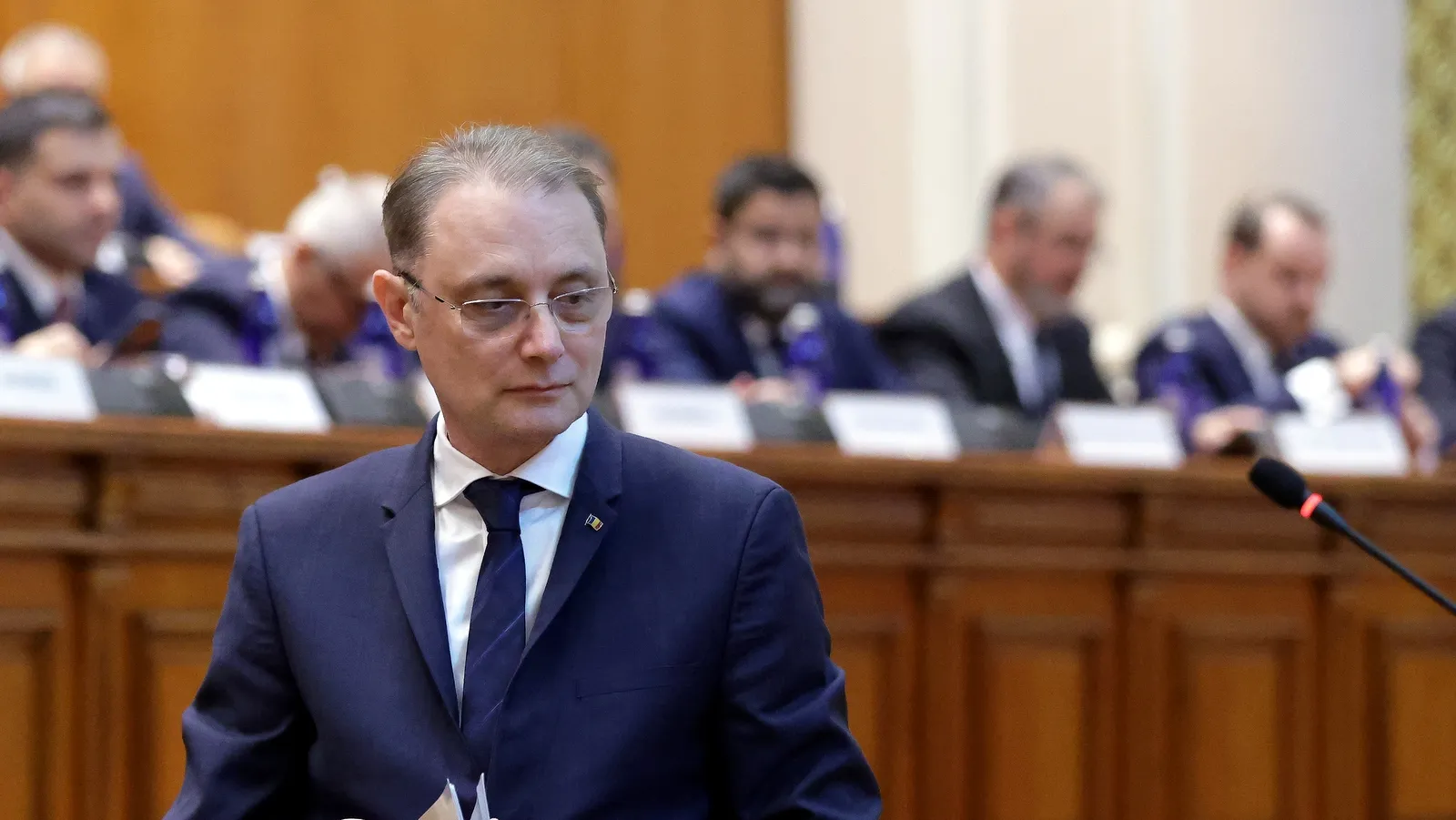 Photo: Balkan Insight
Key points
Romania's parliament elected independent Luca Niculescu prime minister with 280 votes, ending five months of political paralysis under a six-month deal.
Romania's parliament elected the independent Luca Niculescu prime minister on 20 October 2026, with 280 votes in favour and 55 against, well above the 233 needed to confirm a government. The vote ended five months of political crisis that began when a no-confidence motion removed the previous cabinet on 5 May 2026. Niculescu, 55, a former journalist and diplomat, will lead a cabinet of 11 Social Democrat ministers and seven independents.
The result matters because it replaces three failed attempts to form a government with a working administration, and it does so through a fragile six-month truce rather than a full coalition agreement. The centre-right National Liberal Party (PNL) backed Niculescu's appointment but will stay outside the cabinet and support legislation case by case, leaving the minority government dependent on vote-by-vote backing. The deal is designed to keep snap elections off the table for now.
What the vote decided
The Social Democratic Party (PSD), the PNL and several smaller parliamentary groups voted for the cabinet, while lawmakers from nationalist and far-right parties and the reformist Union to Save Romania (USR) voted against. Niculescu told parliament before the vote that Romania had no more time to lose, and pledged to focus on budget revisions, energy security and cutting waste in the public sector. He described himself as an independent prime minister who shares responsibility with other parties for the country's future.
Niculescu spent more than three decades as a journalist before entering public service in 2016 as Romania's ambassador to France. For four years he served as a state secretary at the Foreign Ministry, coordinating Romania's accession to the Organisation for Economic Co-operation and Development (OECD), the club of rich democracies. President Nicușor Dan nominated him on 5 October 2026, his fourth attempt to install a prime minister since Ilie Bolojan's government fell on 5 May 2026.
The crisis started with tensions inside the pro-European coalition formed in June 2025, which grouped the centre-left PSD, the centre-right PNL and two smaller centre-right parties. The coalition's mandate was to stabilise an economy carrying the largest budget deficit in the European Union, secure 11 billion euros in European Union recovery funds and protect Romania's investment-grade credit rating. Unpopular austerity measures meant to cut that deficit strained the alliance until the Social Democrats withdrew their support.
How the crisis began
The threat of snap elections pushed the PNL and PSD toward agreement, since a right-wing surge would likely benefit AUR. Romania's constitution requires two failed attempts to install a government before parliament can be dissolved, so the new appointment makes early elections harder to trigger once the six-month deal expires. The arrangement also matters beyond Romania: the country has the sixth-largest population in the European Union and hosts a major military base and a United States missile shield site in NATO's southeastern flank.
Economic policy is where the partners disagree. Social Democrat leader Sorin Grindeanu said his party will try to pass an investment-focused 2027 budget by the end of November and revise the 2026 budget by the end of October, arguing Romania needs an economic recovery plan rather than austerity. The PNL has defended fiscal restraint and refused to sign a detailed coalition programme, forcing the government to assemble support vote by vote. Grindeanu said he rejected an AUR offer to back a 300 million euro social spending package.
What happens next
Grindeanu ruled out any deal with AUR while he leads the party, citing deep disagreements over Europe and national security, and said he hopes to reunite his former coalition partners within six months under a different economic programme. President Nicușor Dan said Romania would maintain its pro-Western orientation and its commitments to fiscal consolidation. The minority cabinet now faces pressure to rein in one of the European Union's largest budget deficits and restore economic confidence.
Frequently asked questions
How many votes did Luca Niculescu get to become prime minister?
Niculescu secured 280 votes in favour and 55 against, comfortably exceeding the 233 votes needed for confirmation, with backing from the PSD, the PNL and several smaller groups.
Why did Romania's political crisis last five months?
The crisis began when a no-confidence motion removed Ilie Bolojan's government on 5 May 2026. Three nominees then failed: Eugen Tomac withdrew, Adrian Vestea's programme was rejected, and Siegfried Muresan fell short on 30 September 2026.
What must the new Romanian government do next?
Social Democrat leader Sorin Grindeanu aims to revise the 2026 budget by the end of October and pass an investment-focused 2027 budget by the end of November, while the six-month governing deal expires.