Vučić concedes as Student List wins 135 to 140 seats
Serbia's Aleksandar Vučić conceded defeat on 25 October 2026 to the student-led Student List, which preliminary results projected at 135 to 140 seats in the 250-seat parliament.
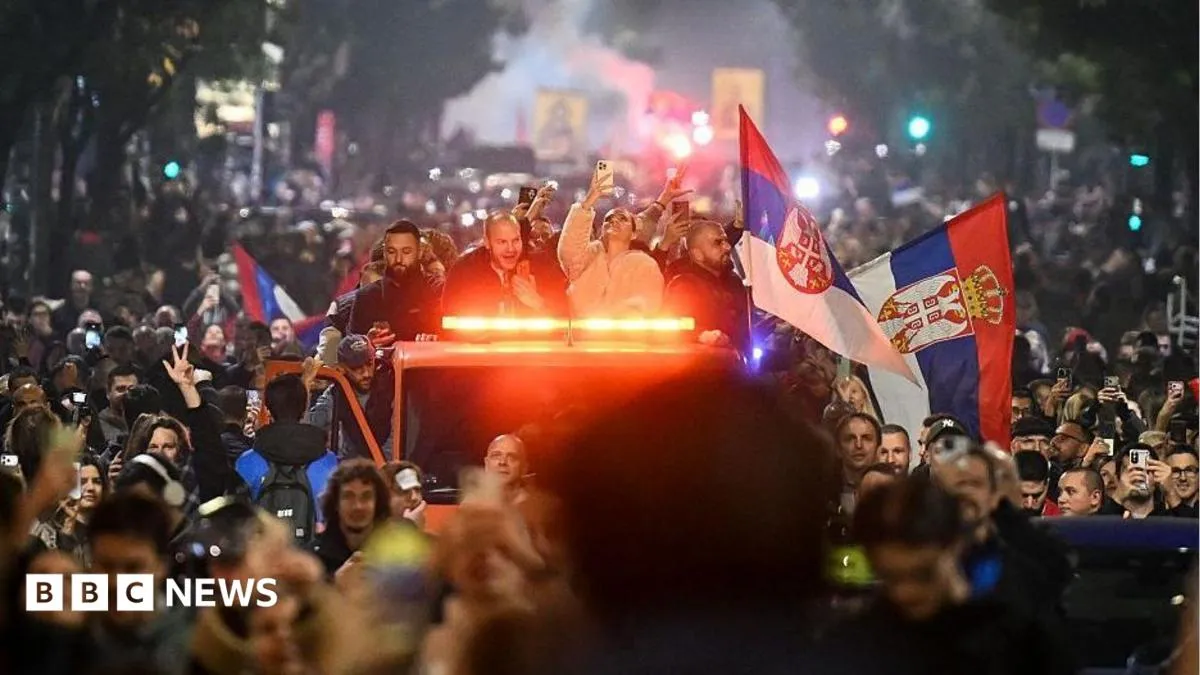 Photo: BBC News
Key points
Serbia's Aleksandar Vučić conceded defeat on 25 October 2026 to the student-led Student List, projected to win 135 to 140 of 250 parliamentary seats.
Serbia's Aleksandar Vučić conceded defeat in snap parliamentary elections on 25 October 2026 to the student-led Student List, telling supporters at his Serbian Progressive Party headquarters in Belgrade that preliminary results showed his party had lost. Vučić said the Student List would take between 135 and 140 seats in the 250-seat parliament, with his party taking 105.
The concession ends Vučić's long grip on power and hands victory to a movement that began as student protests over corruption. Vučić, who dominated Serbian politics as prime minister or president since 2014, had resigned the presidency to run for prime minister. The Student List, a slate of 250 largely unknown candidates including professors, actors and farmers, campaigned on rooting out graft.
What the concession changes
A representative sample by the CESID-IPSPS pollsters suggested the Student List would win 138 seats, with Vučić's Serbian Progressive Party taking 104 and the remainder going to ethnic national minority parties. Vučić himself told supporters the Student List would have between 135 and 140 seats and his party 105, based on preliminary results. Final results were not yet available when he spoke.
Turnout reached 67.6% by 7pm local time, according to pollsters and monitors CeSID and Ipsos, the highest since the breakup of Yugoslavia in 1992. Earlier, Serbia's election commission reported 64.9% had voted by 18:00 local time, two hours before polls closed. Long queues formed across Serbia and in cities with sizeable Serbian communities, including Ljubljana, Munich, Los Angeles, Chicago and Paris.
The snap election traces back to November 2024, when a concrete canopy collapsed at a newly renovated train station in Novi Sad, killing 16 people. Evidence suggested slipshod construction, fraud and corruption were to blame, and student-led demonstrations calling for transparent investigations drew hundreds of thousands to the streets in the largest protests since the Milosevic era.
Turnout hits 67.6%, the highest since 1992
The protests snowballed into a broad anti-government movement over nearly two years, with students manning university blockades labelled by Vučić as tools of foreign powers. In September, nearly two years into the protests, Vučić called snap elections for October, citing "major turbulence on the domestic political scene" and meeting a key student demand. He had earlier pledged at a rally in Novi Sad: "All of this will end on Oct 25."
The Student List's lead candidate, cardiologist Ilija Srdanović, told BBC Serbian: "This will be a free state." The anti-corruption movement's manifesto included purging officials who broke rules cracking down on protesters, stopping party loyalists from leading public enterprises, and freeing the public broadcaster of political control. Vučić and the Serbian Progressive Party have repeatedly denied corruption.
How the canopy collapse triggered protests
Celebrations erupted in Belgrade and other cities after the concession, with crowds dancing, cars honking and fireworks set off. At the Student List's headquarters, supporters chanted "Victory, victory!" Radomir Saičić, a professor at Belgrade University speaking on behalf of the students, said: "Dear Serbia, tonight the voice of the people is being heard." In Novi Sad, the city where the canopy collapsed, the centre was crowded with celebrants.
European leaders congratulated the Student List, including European Commission President Ursula von der Leyen and European Commissioner for Enlargement Marta Kos. Von der Leyen wrote on X that they stood ready to work together to advance Serbia's future in the European Union. Hungarian Prime Minister Peter Magyar also assured the students of his country's support.
Much remains unclear about how the new government will form. It is not yet known who will be prime minister or who will fill key ministerial posts. Radivoje Grujic, a Warsaw-based election consultant, said the biggest uncertainty was who would lead the government and how they would operate on promises to fight corruption, reintroduce the rule of law and re-establish Serbia's position in foreign policy.
Who will lead the new government
The Student List will have to juggle relations with China, a major investor; Russia, Serbia's traditional ally and principal supplier of natural gas; and the European Union, Serbia's largest trading partner. Vučić had backed Serbia's EU candidacy while refusing to impose sanctions on Russia over its full-scale invasion of Ukraine. Political analysts predict some kind of purge of Vučić allies in the police, security services and ministries.
Frequently asked questions
Who won the Serbian election on 25 October 2026?
The student-led Student List won the snap parliamentary election. Aleksandar Vučić conceded defeat, saying preliminary results showed the Student List would take between 135 and 140 of the 250 seats, with his Serbian Progressive Party taking 105.
Why were snap elections held in Serbia?
Vučić called snap elections in September after nearly two years of student-led protests over corruption, triggered by the November 2024 collapse of a train station canopy in Novi Sad that killed 16 people.
What was the turnout in the Serbian election?
Pollsters and monitors CeSID and Ipsos put turnout at 67.6% by 7pm local time, the highest since the breakup of Yugoslavia in 1992. Serbia's election commission reported 64.9% had voted by 18:00 local time.