Supreme Court denies Mohammed bid to revive 9/11 plea deal
The US Supreme Court on 19 October 2026 declined to hear appeals from Khalid Sheikh Mohammed and two co-defendants seeking to restore plea deals that would have spared them the death penalty.
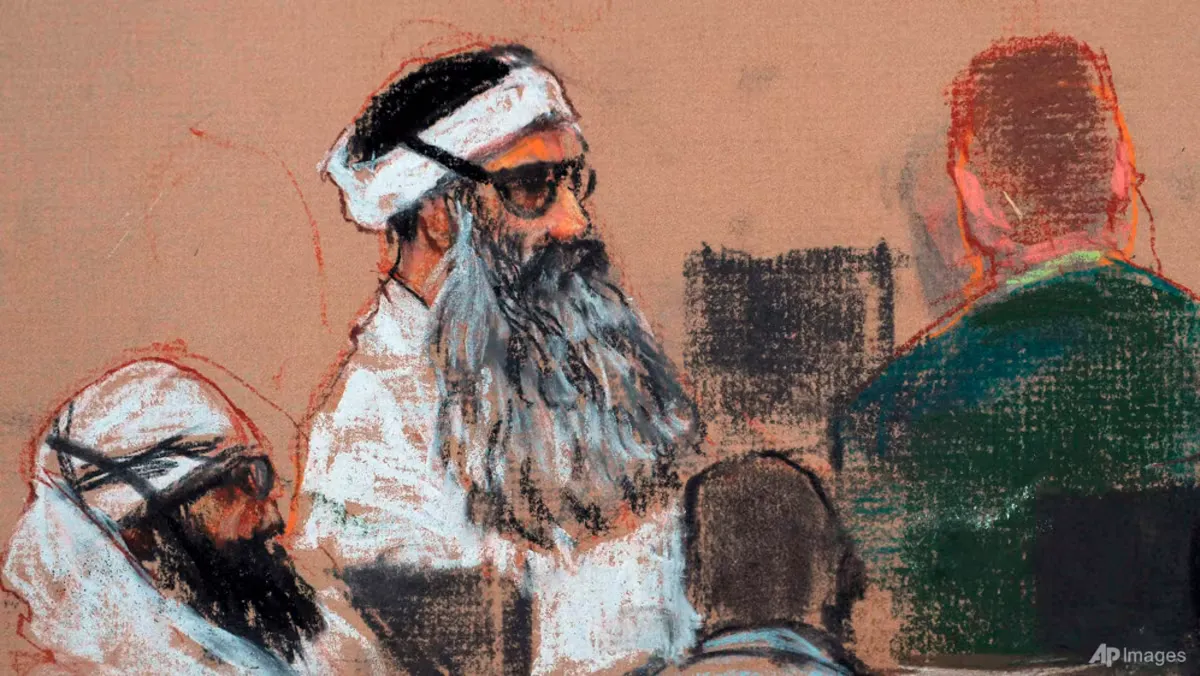 Photo: CNA
Key points
The US Supreme Court on 19 October 2026 denied appeals by Khalid Sheikh Mohammed and two co-defendants seeking to revive plea deals that would have spared them the death penalty.
The US Supreme Court on 19 October 2026 rejected an appeal by Khalid Sheikh Mohammed and two alleged accomplices, Walid bin Attash and Mustafa al-Hawsawi, that sought to revive plea deals later revoked. The court issued a brief, unsigned opinion declining to take up the appeal, and turned down the petitions without comment.
The decision leaves in place a lower court ruling that then-Defence Secretary Lloyd Austin acted within his legal authority when he threw out the agreements. The three men are among the handful of detainees still held at the Guantanamo Bay military base in Cuba, and are set to go on trial in June 2028.
What the court decided
Mohammed, also known as KSM, was considered one of Al-Qaeda leader Osama bin Laden's top lieutenants before he was captured in March 2003 in Pakistan. He is accused of developing and directing the plot to crash hijacked airliners into the World Trade Center and the Pentagon; a third hijacked plane crashed into a field in Pennsylvania.
The plea agreements, signed in 2024 during the administration of President Joe Biden, would have allowed the three men to plead guilty and receive life sentences in prison without parole, in exchange for avoiding the death penalty. The deals were approved by military prosecutors and the Pentagon's senior official for Guantánamo Bay before Austin intervened.
How the plea deals unravelled
After criticism from some victims' families, Austin ordered the plea deals thrown out two days after they were accepted, saying a decision on the death penalty in an attack as grave as 11 September 2001 should only be made by the defence secretary. That decision sparked a legal battle over whether such a move was permitted.
Defence attorneys argued Austin, who served under Biden, acted too late. The D.C. Circuit rejected that argument, and an appellate court ruled Austin had "acted within the bounds of his legal authority." Relatives of the September 11 victims were split on the agreements: some said a trial was the best path to justice, while others saw the deals as the best hope for concluding the long case.
Where the case stands now
The Supreme Court denied review in two cases, Mohammad v. United States and bin 'Atash v. United States, without comment. Justice Brett Kavanaugh did not participate in Mohammad's case. The men had spent nearly two decades in Guantanamo Bay before entering the plea agreements more than two years ago. Much of the legal jousting in the 9/11 defendants' cases has focused on whether they could be tried fairly after having undergone torture at the hands of the Central Intelligence Agency. The prosecution has been beset by two decades of legal gridlock since the detention facility was set up in 2002 by then-President George W. Bush. In August, a US Air Force judge set the trial for Mohammed and his co-defendants for June 2028. The attacks of 11 September 2001 killed nearly 3,000 people, and the Guantanamo facility was created to house foreign terrorism suspects following those attacks.
Frequently asked questions
Why did the Supreme Court deny the plea deal appeal?
The Supreme Court declined to take up the case without comment, leaving in place a D.C. Circuit ruling that then-Defence Secretary Lloyd Austin had legal authority to revoke the plea deals.
What did the original plea agreements offer?
The 2024 agreements would have allowed Khalid Sheikh Mohammed, Walid bin Attash and Mustafa al-Hawsawi to plead guilty and receive life sentences without parole, avoiding the death penalty.
When is the 9/11 trial scheduled?
A US Air Force judge set the trial for June 2028 for Mohammed and his co-defendants, who are held at Guantanamo Bay, Cuba.