UK and EU hold rare summit to finalise Brexit reset deal
UK Prime Minister Andy Burnham meets EU leaders in Brussels on 20 November to sign agreements on food, energy and youth mobility, the second such summit since Brexit.
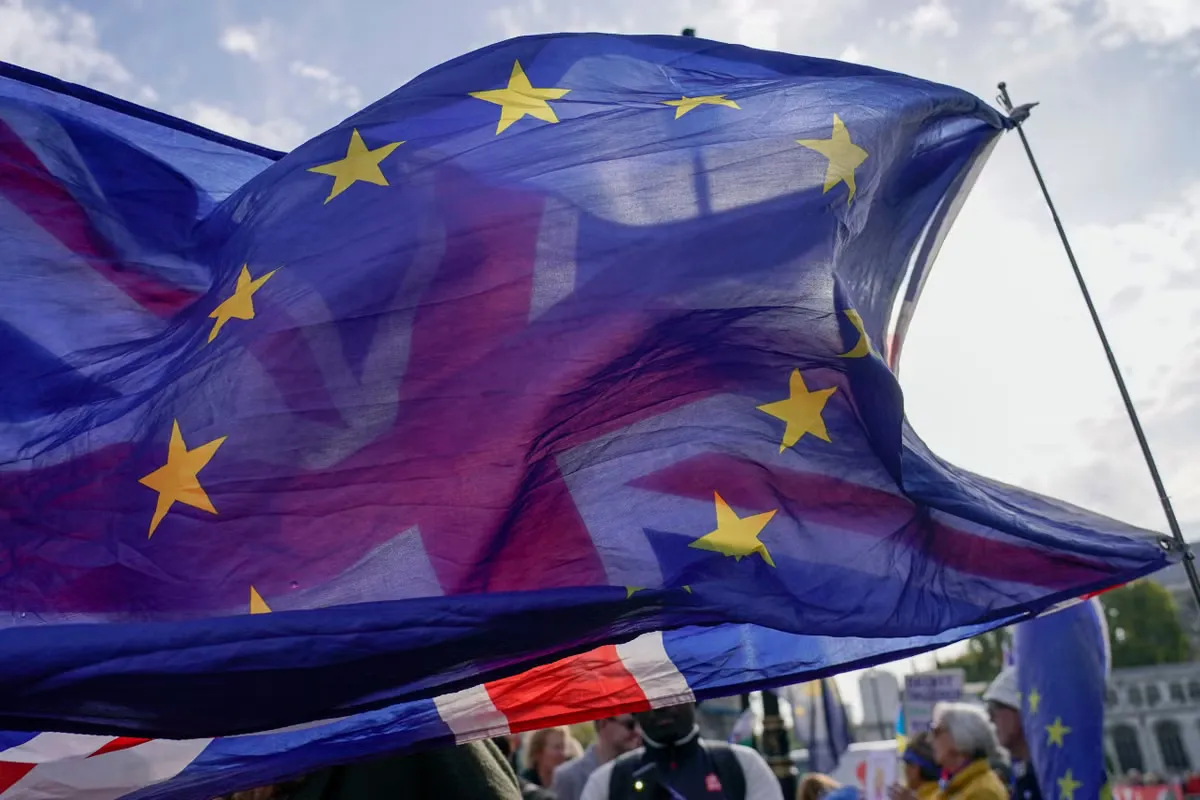 Photo: The Independent
Key points
The UK and EU held a rare summit in Brussels to finalise a Brexit reset deal covering food, energy and youth mobility.
UK Prime Minister Andy Burnham met European Council President António Costa and European Commission President Ursula von der Leyen in Brussels on Friday for a rare summit, the second since Britain left the EU. The talks, scheduled to last just under an hour, were followed by a plenary session with UK ministers and European commissioners. Burnham described the summit as a step toward undoing a decade of damage caused by Brexit. "The Brexit we were given has not worked. We have lost more than we gained," he said this week.
The two sides expected to sign a trade deal for food and drink, an agreement on emissions trading, and a plan to let young people work for limited periods across Britain and the EU. Burnham said the deals could add a modest 0.4% to Britain's economy. The food and drink agreement would create a sanitary and phytosanitary common area, removing red tape on animal and plant products, but is not expected to take effect until 2028. To secure it, the UK will align with EU standards, meaning it must abandon a planned ban on foie gras imports.
Deals on the table
The emissions trading deal links the British emissions trading system with its larger EU counterpart, restoring a link severed by Brexit. The youth mobility scheme allows up to 100,000 EU citizens under 31 to come to the UK each year. Tuition fees were kicked down the road, with a supplementary agreement to sort them out within six months. The UK can hold up the youth deal if the EU does not meet its side.
Von der Leyen said she wanted the summit to be "a summit of ambition and concrete results. More opportunities for young people. Easier agrifood trade. And a stronger cooperation on economic security." Costa said, "Our security and prosperity are closely intertwined, making a strong partnership between us essential." The war in Ukraine and the UK's military strength are drawing the two sides together, with the summit providing an opportunity to discuss stronger cooperation on security and defence.
A leaked draft of a joint statement expected to be signed by Burnham and von der Leyen states that both sides will establish "a structured dialogue" to discuss "returns to third countries" for rejected asylum seekers. Until now, the Home Office has been seeking bilateral agreements with third countries but with no obvious success. Last week, five EU countries – Austria, Denmark, Germany, Greece and the Netherlands – announced an agreement in principle with Rwanda to establish a migrant "return hub" there in 2027.
Security and migration
Burnham hinted at possible cooperation with EU countries last week when he told reporters that the UK had not had direct discussions with European governments involved in return hubs but "we will watch that [the five-country deal] with interest." The summit also includes a roundtable with business leaders at the British ambassador's residence, where Burnham said, "It just makes sense to get closer," hailing the day as "a big day and, hopefully, a positive day." Chancellor John Healey told the meeting, "Today's deal reduces the red tape that gets in your way; it should produce savings."
Talks to seal the reset went down to the wire, with the EU issuing a late-night compromise text under a "silence procedure" after a crunch hours-long meeting of ambassadors. Under the procedure, if no member state breaks the silence, the text is considered adopted. This morning diplomats said "no one had broken the silence," making the text available for signing by the UK. The headline agreements include the food and drink deal, the electricity carbon emissions deal, and the youth mobility cap.
EU wariness remains
Despite the warm feelings towards the Labour government in European capitals, EU officials remain wary of encouraging talk of the UK rejoining. They are weary from the shifting demands of seven British prime ministers over the last decade and want real clarity about the country's intentions. Ireland's ambassador in London, Sonja Hyland, said that when Britain voted for Brexit, "there was a lack of clarity as to exactly what that meant." If Britain wants to reopen negotiations, she said, it must "make a clear decision as to what it wants."
France's insistence that the UK could not have voting rights at any stage during the shaping of legislation on food standards and public health risks is a line in the sand for Burnham. Several large member states feel the way forward after this summit is not more iterative reset summits or mini-deals. There will be negotiations on allowing the UK into the energy single market, but no talks on pharma or chemicals, according to some capitals. The summit is seen as a step, not an endpoint, in the UK-EU relationship.
The opening ceremony around 10.30am local time included a rendition of God Save the King and the Ode to Joy. Burnham has said all options should be on the table for future relations, including rejoining the now-27-nation bloc, but stressed that reversing Brexit is far from imminent. It would need the backing of British voters and the unanimous support of a mistrustful EU. The next dated event is the supplementary agreement on tuition fees, to be sorted within six months.
Frequently asked questions
What did the UK and EU agree at the Brussels summit?
The two sides agreed on a food and drink trade deal, an emissions trading link, and a youth mobility scheme allowing 100,000 EU citizens under 31 to come to the UK each year. The food deal takes effect in 2028, and tuition fees are to be resolved within six months.
Why is the UK-EU summit significant?
It is only the second summit since Brexit, a decade after Britain voted to leave. Prime Minister Andy Burnham described it as a step toward undoing a decade of damage, and it could add 0.4% to Britain's economy. It also marks the first formal talks on asylum returns to third countries.
What did Andy Burnham say about rejoining the EU?
Burnham said all options should be on the table, including rejoining, but stressed it is far from imminent. It would need British voters' backing and unanimous EU support. EU officials remain wary, with Ireland's ambassador calling for clarity on Britain's intentions.