Zelensky says US resumed strike intelligence sharing with Ukraine
Ukrainian President Volodymyr Zelensky said on 20 October that the United States resumed sharing intelligence on Russian strikes, restoring advance ballistic missile warnings curtailed the previous week.
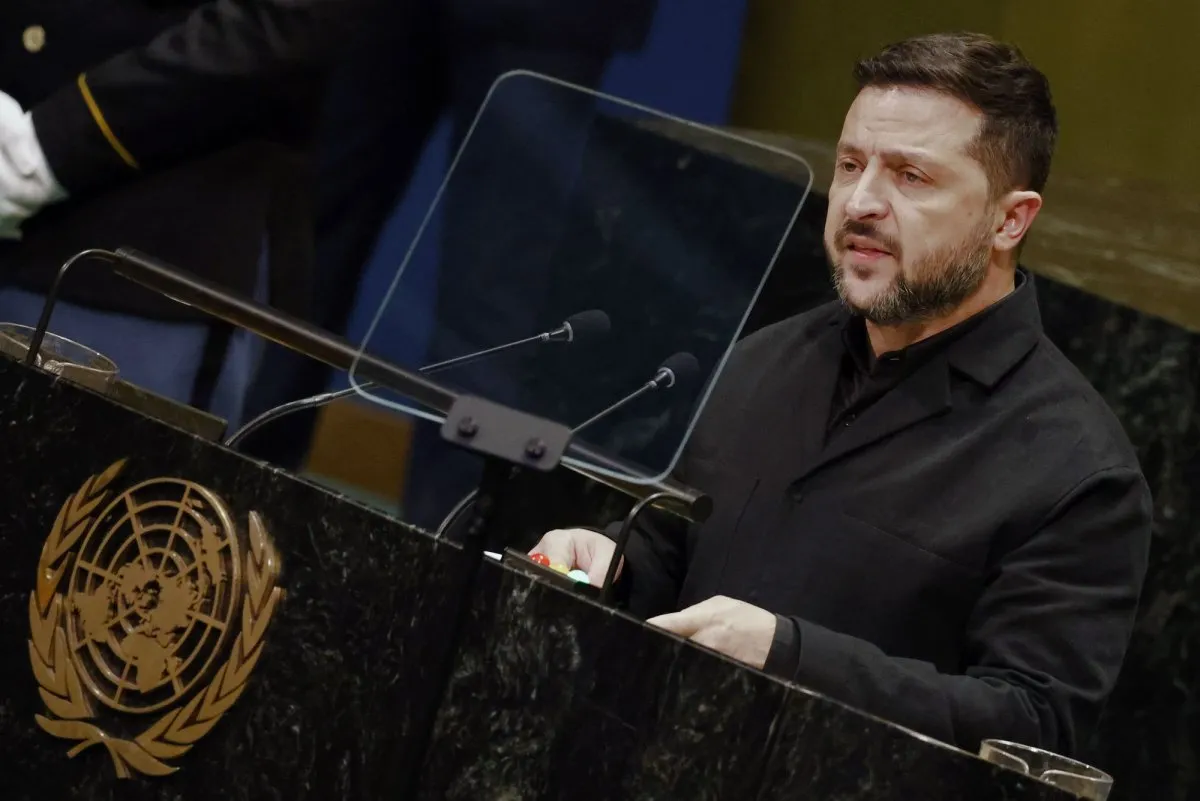 Photo: UPI
Key points
Zelensky said the United States resumed sharing intelligence on Russian strikes, restoring advance ballistic missile warnings to Ukraine after they were curtailed the previous week.
Ukrainian President Volodymyr Zelensky said on 20 October that the United States has resumed sharing intelligence about Russian strikes with Ukraine, restoring advance warnings of ballistic missile attacks that had seemingly been curtailed the previous week. He spoke after meeting US special envoy Steve Witkoff in Oslo, Norway. The resumption matters because advance warning of incoming ballistic missiles gives Ukrainian civilians, including children, time to reach shelter. Zelensky said the restored flow of intelligence would save lives, calling it very important for civilians who can now hear when a ballistic missile is coming. The warnings had apparently been cut off the previous week.
What the intelligence resumption changes
Zelensky described the restored intelligence sharing plainly: "Now it works. It's great." He added, "It's very important for our people, for children, adults, civilians, because we can hear when ballistic [missiles] is coming. So we are thankful to the American side." The comments came at a news conference in Oslo on 20 October.
The mechanism behind the restored warnings is early warning intelligence on Russian ballistic missile launches, which Ukraine's military uses to alert civilians before an attack. Zelensky's adviser Serhii Beskrestnov had said the previous week that the lack of US intelligence, including information about ballistic missile launches, meant people were dying in Ukraine.
US officials had denied cutting intelligence sharing. White House officials said there were no changes to intelligence sharing operations between the two countries, and Secretary of State Marco Rubio rejected as "scandalous" accusations that Ukrainians were dying because the US was withholding intelligence. Beskrestnov had said the flow of warnings was inconsistent: "Sometimes we receive this information before the attack, another time we [do] not."
Where the Oslo talks stood
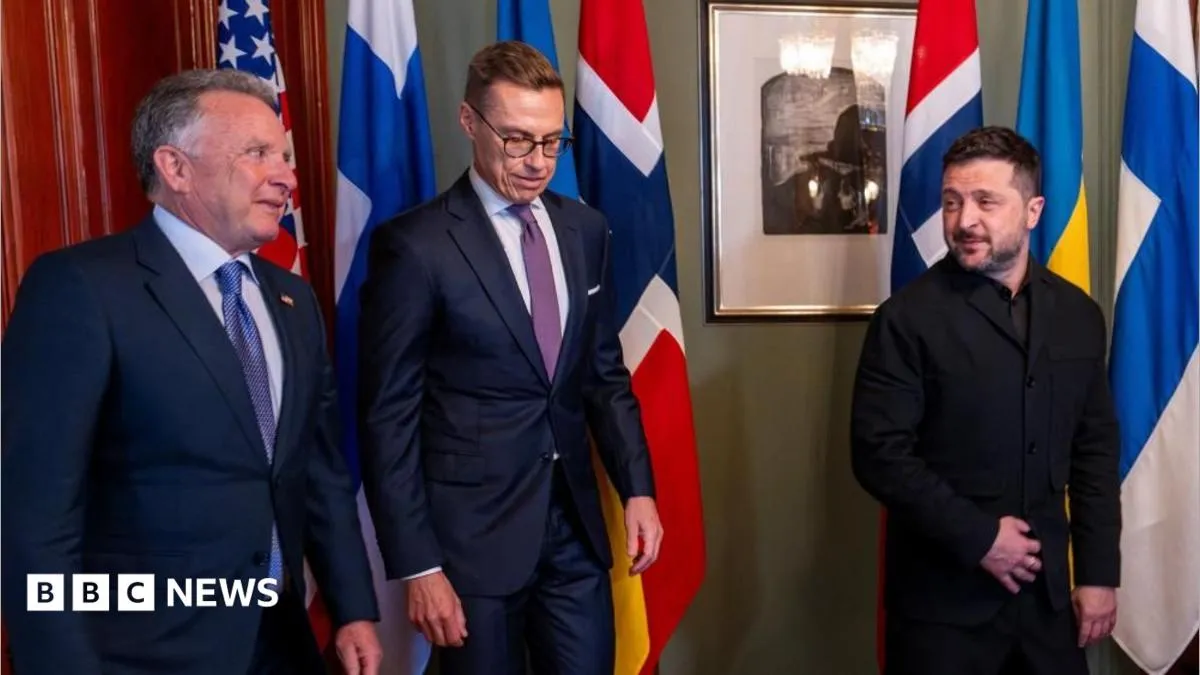
The Oslo talks on 20 October brought together Zelensky, Norwegian Prime Minister Jonas Gahr Støre, Finnish President Alexander Stubb and Witkoff, with Jared Kushner joining by video link. A US official called the talks "constructive" and said Witkoff would aim to create a pathway toward direct trilateral and broader multilateral negotiations.
Witkoff was scheduled to travel to St Petersburg on 21 October to meet Russian President Vladimir Putin and present proposals developed by Ukrainian, American and European representatives. Finnish President Alexander Stubb said "genuine progress" was made during the talks but that patience was needed, while Støre said the aim was to put diplomatic efforts on a more constructive path.
Alongside intelligence sharing, Ukraine's access to satellite communications remained restricted. Zelensky said restrictions on Ukraine's use of the Starlink internet network were ongoing, and that speed limits had been imposed on Starlink terminals without advance notice to Kyiv. The slowdown has crippled Ukraine's ability to launch mid-range drone strikes on Russian battlefield positions, and Zelensky raised the issue in his call with Rubio.
Zelensky also said he offered to stop Ukraine's long-range attacks on Russian oil refineries, a key demand of President Donald Trump, if the US provided Kyiv with Patriot missile interceptors. The Pentagon has blocked the delivery of Patriots to Kyiv paid for by other countries, and Rubio said interceptors were in short supply and needed elsewhere.
The talks took place amid the worst crisis in US-Ukraine relations since Putin's full-scale invasion nearly five years ago. Trump has said Ukraine needs a new president and on 20 October repeated that Zelensky could have made a deal two years ago. The crisis began 10 days earlier when Trump announced he was lifting US sanctions on Russian diesel.
Zelensky rejected a proposed trilateral summit of Trump, Putin and Chinese President Xi Jinping that could discuss Ukraine without Kyiv present. "There can be nothing about Ukraine without Ukraine," he said, adding that any discussion of Ukraine's future is acceptable only when Ukraine is at the table of negotiations. Ukrainian Foreign Minister Andrii Sybiha had also rejected the prospect.
Witkoff's meeting with Putin in St Petersburg on 21 October is the next step, where he will present the updated proposals. Zelensky said the Oslo talks also produced progress on postwar security guarantees, including arrangements resembling NATO's Article 5 collective defense commitment, and that he expected good results from his discussions with Rubio.
Frequently asked questions
What did Zelensky say about US intelligence sharing?
Zelensky said on 20 October that the United States has resumed sharing intelligence about Russian strikes with Ukraine, restoring advance warnings of ballistic missile attacks that had seemingly been curtailed the previous week.
When and where did Zelensky make the announcement?
He spoke at a news conference in Oslo, Norway, on 20 October, after meeting US special envoy Steve Witkoff alongside Norway's Prime Minister Jonas Gahr Støre and Finland's President Alexander Stubb.
What did US officials say about intelligence sharing?
White House officials said there were no changes to intelligence sharing operations, and Secretary of State Marco Rubio rejected as "scandalous" accusations that Ukrainians were dying because the US was withholding intelligence.